Drain cleaning pricing for plumbers in 2026: what to charge
Drain cleaning pricing in 2026: what plumbers should charge for snaking, hydro jetting, and camera inspection, with a simple floor-rate formula.
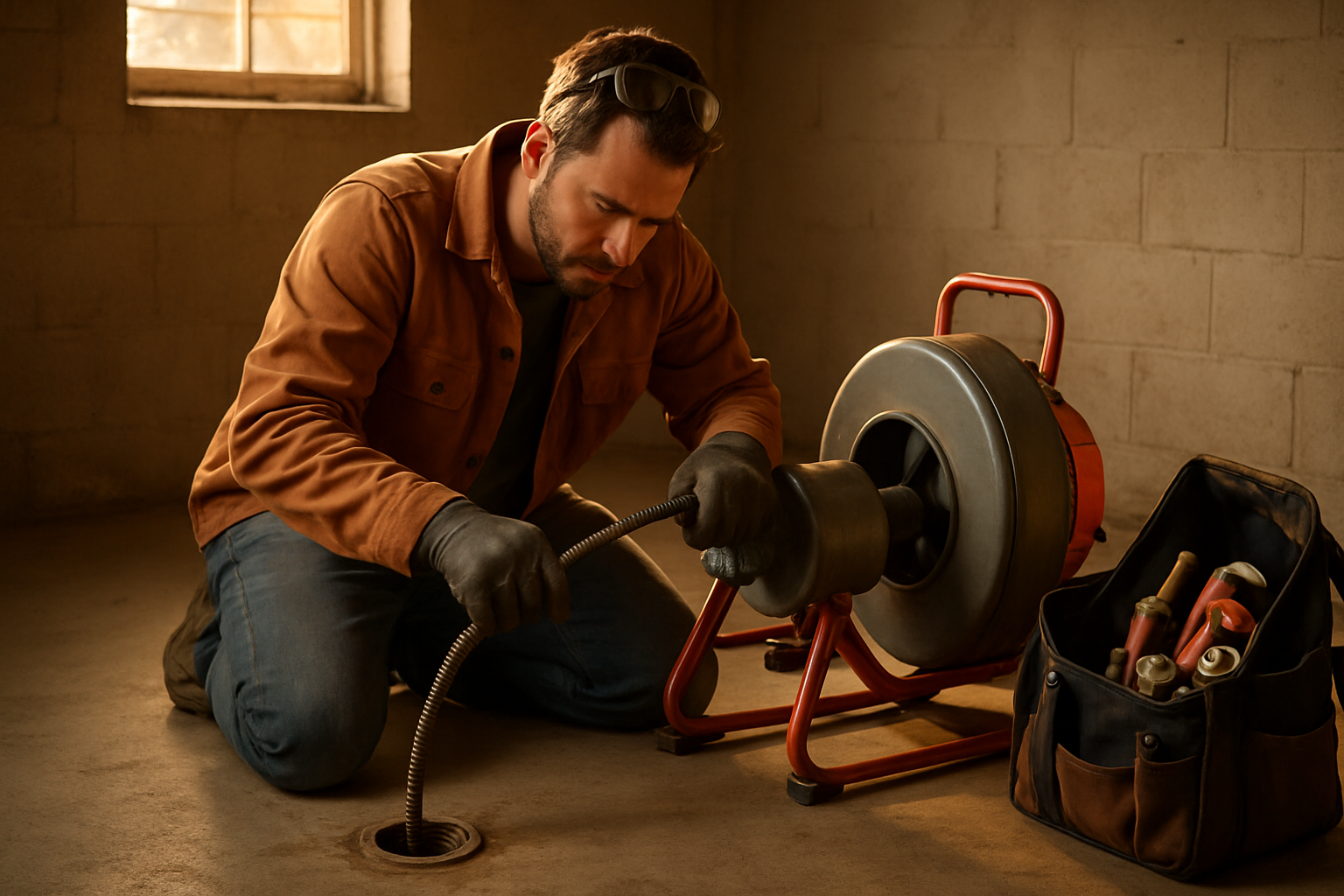
Every plumber has drain cleaning on the schedule most weeks, but drain cleaning pricing is harder to get right than it looks. A slow kitchen sink takes 20 minutes; a backed-up main line with roots takes two hours and a power auger. Charge both the same flat fee and one job subsidizes the other. This guide covers per-job rate benchmarks for 2026, how to price hydro jetting and camera inspections as add-ons, and the floor-rate math to make sure no drain call costs you money.
Drain cleaning pricing benchmarks for 2026
Residential drain cleaning rates reflect what licensed plumbers charge across thousands of jobs tracked by HomeGuide's 2026 drain cleaning cost data. Here's how the major job types break out:
| Job type | Typical range | Notes |
|---|---|---|
| Secondary drain snaking (sink, tub, shower) | $100–$200 | 20–45 min for a standard clog |
| Main line snaking | $175–$350 | Floor cleanout or roof stack access |
| Main line with root intrusion | $350–$600 | Power auger plus multiple passes |
| Hydro jetting — residential | $350–$800 | High-pressure flush for grease buildup or persistent roots |
| Hydro jetting — commercial or severe | $600–$1,500 | More footage, higher-PSI equipment |
| Video/camera inspection (standalone) | $250–$500 | Often bundled when repair work follows |
| Camera + main line hydro jet | $500–$1,100 | Natural upsell that locks in the diagnosis |
These ranges are national averages. High-cost markets — California, New York, the Pacific Northwest — typically run 20–35% above these figures. Rural Midwest and Southeast markets tend to sit at or near the low end. These numbers show you where the market is. Your floor rate (covered below) tells you whether the market rate actually covers your costs.
What to charge for hydro jetting
Hydro jetting commands a meaningful premium over snaking because the equipment investment, time, and skill level are genuinely higher. A trailer- or van-mounted jetter capable of the pressure needed for residential main line work (typically 1,500–4,000 PSI) represents a capital cost that snaking equipment doesn't. Add nozzle wear, hose footage, and the care required when jetting older or fragile pipe materials, and the premium is earned rather than just collected.
For residential work, most solo plumbers charge $350–$500 for a standard hydro jet on a main line with moderate grease buildup. Jobs involving root intrusion or a longer run (over 100 feet of line) move into the $600–$800 range. Commercial jobs — restaurant grease traps, multi-unit building mains — routinely exceed $1,000, and some operators shift to time-plus-equipment pricing for those rather than flat rate.
Whether you quote hydro jetting flat-rate or time-and-materials depends on how well you know the job going in. If it's a repeat customer with a known line length and consistent buildup, flat rate protects your margin when the job goes quickly. If the scope is uncertain — you haven't camera-scoped it yet, or you're dealing with a lateral you haven't cleaned before — time-plus-equipment keeps you from eating a four-hour job you bid as two hours. For a deeper look at how to make that call by job type, see the flat-rate vs. time-and-materials breakdown for solo plumbers.
Before you quote any hydro jet job, layer your overhead rate onto the base price using the markup calculator. Equipment-intensive jobs need overhead factored in before you name a number — not after you've already committed to a price.
Drain camera inspection pricing
Camera inspection has shifted from a luxury add-on into a standard step on any main line call. Part of that shift is customer education — they want to see what you found. Part of it is that footage protects you when a customer disputes the diagnosis or calls back three weeks later claiming you didn't fix the problem.
Standalone camera inspections run $250–$500 per HomeGuide's 2026 data. The spread reflects local competition and run length: a 50-foot residential lateral takes 15 minutes; a 200-foot commercial main takes considerably longer and often requires a dedicated setup.
The stronger business move is bundling: offer the camera as part of the main line cleaning rather than as a separate line item. Customers respond better to "I'll clean it and scope it for $525" than a two-line invoice with separate charges for each service. The bundled rate of $500–$1,100 (depending on job type) typically yields a better effective hourly rate than selling each piece separately.
Make camera inspection the default on any main line proposal, not something the customer can optionally decline. You want the footage. If a customer pushes back on the bundled price, you can offer the scope as a standalone — but leading with the bundle closes more often and positions you as thorough rather than upselling.
If the camera reveals a cracked pipe, offset joint, or root ball that needs repair, you've already got the customer committed to the job and a clear picture of the scope before you name a repair price. That's a much easier path to a signed repair quote than arriving after a different plumber already scoped it.
How to price a main sewer line job
Main line work is where drain cleaning pricing gets most contractors in trouble. The call comes in as a backup. It turns into a roots job. Roots turn into a cracked pipe diagnosis. If your flat rate only covers "main line snaking," you're either absorbing the scope creep or renegotiating mid-job — an uncomfortable conversation once you're already working.
A tiered approach prevents most of those conversations. Quote a range upfront and get explicit sign-off before moving to a higher tier:
- Diagnostic service call — charge your standard trip and diagnostic fee (see the plumbing service call pricing guide for 2026) before drain work starts. This covers the first assessment and sets the scope.
- Tier 1 — standard main line snaking — $175–$350. Single cable pass, normal buildup, no root intrusion found.
- Tier 2 — main line with roots — $350–$600. Power auger, multiple passes, root-cutter head. Quote a range here because time genuinely varies with root mass.
- Tier 3 — main line + camera — $500–$800. Add camera inspection after cleaning to confirm the line is clear and document pipe condition. Protects you on callbacks.
Put the tier structure in writing, not just in the verbal explanation. Even a single line in your quote — "upgrade to Tier 2 if root intrusion is present: $350–$600" — takes 30 seconds to add and prevents 90% of post-job price disputes. Customers who see the tiers upfront rarely push back when you move up. They knew it was a possibility from the start.
Your floor rate for drain cleaning jobs
The benchmarks above show where the market is. Your floor rate shows where you can't go below. They're different numbers and both matter.
The Bureau of Labor Statistics reports a median annual wage of $62,970 for plumbers, pipefitters, and steamfitters as of May 2024 — roughly $30 per hour for an employed plumber. As a solo contractor you need to bill substantially above that, not because your skills are worth more per hour, but because you carry costs that an employer normally absorbs.
Three gaps close the distance between the BLS wage and what you actually need:
Self-employment taxes. The IRS requires self-employed contractors to pay both halves of FICA — a combined 15.3% on 92.35% of net earnings. On $63K of net income that's roughly $8,900 in SE taxes before a dollar of income tax.
Business overhead. Liability insurance, your van, tools, licensing, and marketing are costs the BLS wage figure doesn't include. A realistic overhead budget for a solo residential plumber running one van runs $15,000–$25,000 per year.
Non-billable time. Estimating, driving, invoicing, and chasing unpaid work rarely get billed. If one in four working hours is non-billable, your effective hourly target needs to be at least 33% higher than your income goal divided by total working hours.
The practical result: most solo plumbers need to generate $65–$90 per billed hour just to approximate what a mid-wage employed plumber takes home after their employer covers those gaps. A $150 secondary snake that takes 30 minutes on-site plus 20 minutes of drive time generates about $113/hour of billed revenue — tight if your overhead is at the high end. The $500 hydro jet that takes 90 minutes on-site generates $333/hour of billed revenue — much stronger.
That's why pricing drain cleaning by job type — not by the hour — is the right move. The market has already priced the complexity and time into the ranges above. Your job is to make sure your flat rates sit above your floor so the fast jobs build margin, not just cover costs, and the slow jobs don't pull you under.
Takeaways
- Drain cleaning pricing in 2026 runs from $100–$200 for a secondary drain snake to $600–$1,500 for commercial hydro jetting, per HomeGuide's 2026 contractor rate data.
- Hydro jetting earns a genuine premium — the equipment investment and skill level are higher, and the market price reflects that.
- Bundle camera inspection with main line cleaning: it improves your margin and sets up repair-work opportunities more naturally than selling them separately.
- Main line jobs should be quoted in tiers with written go/no-go thresholds at each tier change — this prevents mid-job renegotiation.
- Your floor rate is set by your specific overhead and tax load, not the BLS median wage; run the floor-rate math against every job type you offer.
Build consistent drain cleaning quotes from the truck
Most solo plumbers rebuild the pricing math from scratch on every call — is this a $175 job or a $350 job? The answer lives in their head until they put a consistent rate card in place. The right quoting tool locks your tiers in once and generates a professional, branded quote for any drain call in under a minute, right from the truck.
JobEstimator is built for solo and small-crew trade contractors. Set your base rates and overhead multipliers once, then pull up a quote for any job type in seconds. Plans start at $39/mo — less than what you likely made on your last hydro jet. Try it free; no credit card required.