Sewer line repair pricing for plumbers in 2026: what to charge
Sewer line repair pricing for plumbers in 2026: what to charge per foot, trenchless vs. open-cut cost comparison, and how to quote camera inspections.
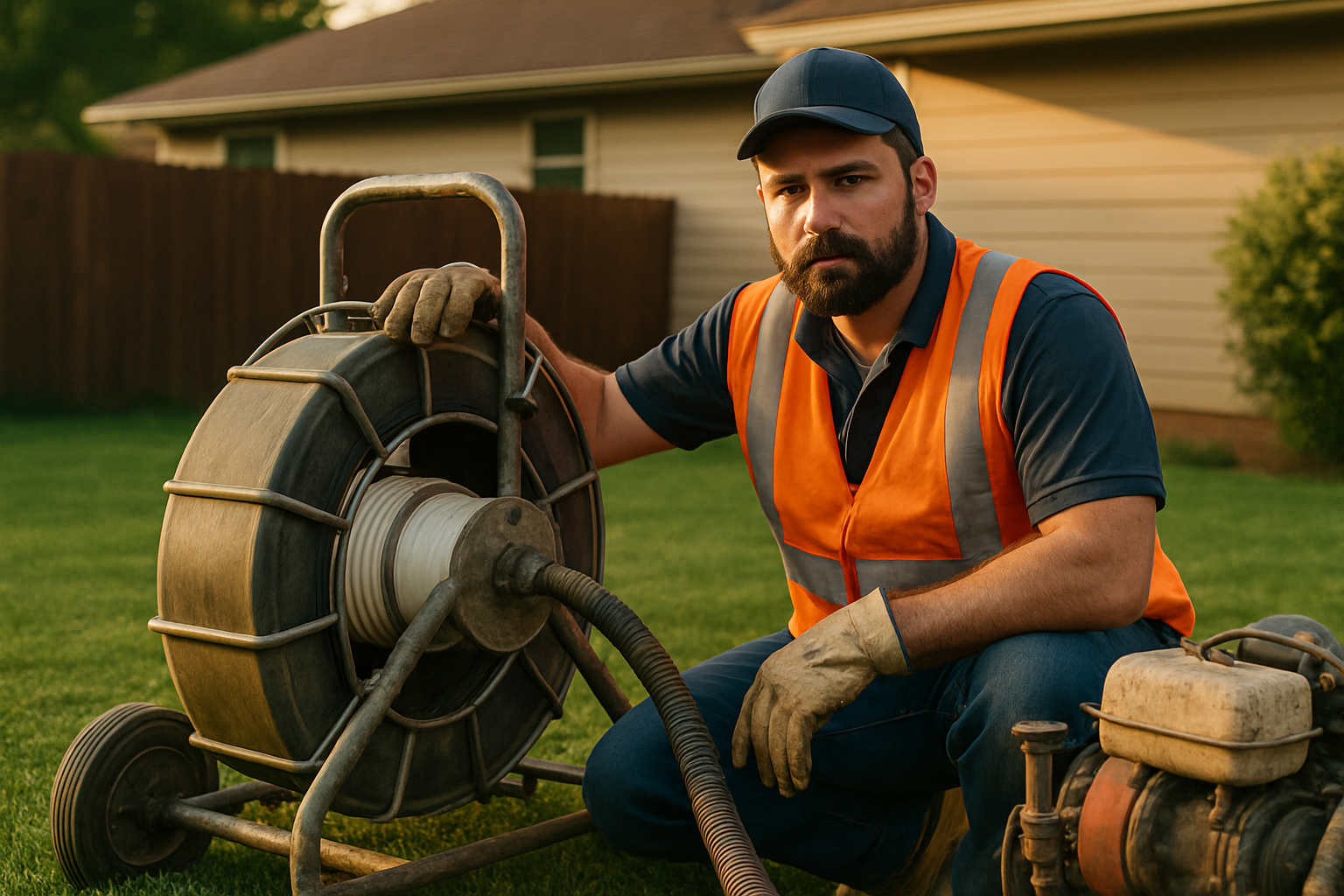
Sewer line repair is some of the highest-dollar plumbing work you'll quote — and some of the most variable to price. A job that camera-scopes as a spot repair can turn into a full-length replacement the moment you see 40 feet of root intrusion, or your open-trench estimate didn't account for the concrete apron sitting over the lateral. This guide covers sewer line repair pricing for plumbers in 2026: per-foot rates by method, camera inspection fees, the add-ons that swing a bid, and how to anchor your estimate to real numbers before you commit.
Sewer line repair pricing in 2026: what plumbers charge
Sewer repair isn't one job — it's a menu of services, each with its own cost structure. Here's where the national market sits in 2026, based on data from HomeGuide's 2026 sewer cost guide and Angi's national pricing dataset:
| Service type | Typical range |
|---|---|
| Sewer camera inspection | $125–$400 per job |
| Hydro jetting (line clearing) | $250–$800 per job |
| Spot repair, open trench | $1,500–$4,500 per location |
| CIPP lining (trenchless) | $90–$250 per linear foot |
| Pipe bursting (trenchless) | $90–$250 per linear foot |
| Open-cut full replacement | $80–$300 per linear foot |
A typical 50-foot residential lateral in a suburban market lands at $7,000–$14,000 for trenchless work, or $9,000–$18,000 for open-cut once surface restoration is included. High-cost metros run 20–30% above these national figures depending on local labor rates and permit costs.
If you're also quoting drain work, see our drain cleaning pricing guide for plumbers for how to tier your snaking and jetting rates.
Open-cut vs. trenchless sewer line pricing: what changes
The repair method drives the biggest swing in your quote total. Understanding the economics of each helps you price them correctly and explain the difference to customers who only see the per-foot number.
Open-cut (traditional excavation) is the baseline: dig a trench, remove the old pipe, lay new pipe, backfill, compact, and restore the surface. Base pipe-and-labor runs $80–$300 per linear foot. But that number excludes surface restoration, which adds real cost depending on what's above the line:
- Grass and soft landscaping: $500–$1,500 for a typical 50-foot run
- Concrete flatwork: $6–$12 per square foot of replaced slab
- Asphalt driveway: $3–$8 per square foot
- Interior slab break-up (under the house): $300–$350 per linear foot for the concrete work alone
A 50-foot lateral with a concrete driveway crossing can easily add $3,000–$5,000 to the open-cut total before you've replaced a single foot of pipe.
Trenchless methods eliminate most restoration expense. Two main options:
- CIPP (cured-in-place pipe lining): A resin-saturated liner is pulled into the existing pipe, inflated, and cured in place — creating a structural pipe inside the old one. Best for cracked, root-invaded, or partially collapsed lines where the pipe alignment is mostly intact. Market rate: $90–$250 per linear foot.
- Pipe bursting: A cone-shaped head is pulled through the old pipe, fracturing it outward while pulling new pipe in behind it. Used when the host pipe is badly crushed or misaligned. Market rate: $90–$250 per linear foot.
The tradeoff: trenchless typically adds $20–$50/ft in method cost over open-cut pipe alone, but removes $50–$100/ft in restoration cost on the average job — making total project cost comparable or lower once you add surface reinstatement. That math tips further toward trenchless in urban settings where access is tight and concrete is expensive.
How to price a sewer camera inspection
Never fold the camera inspection into your repair estimate and absorb it if the customer doesn't proceed. Price it as its own line item every time.
National data from Angi puts residential camera inspections at $125–$400. Where you land in that range depends on:
- Run length. A 50-foot cleanout-to-main inspection and a 150-foot root-to-city-main run are different jobs. Consider pricing by footage for laterals over 75 feet.
- Access method. Cleanout access, pulling a toilet to access, and digging a pit each add labor time. Price accordingly.
- Digital recording delivered to the customer. If you send a video file or a shareable link, that's a value-add worth charging for — and it protects you legally if there's a dispute about what was found before repairs started.
A reliable structure: charge $200–$300 for a standalone inspection, and credit $100–$150 toward the repair if the customer books within 7 days. Customers see a real discount; you don't give the inspection away on jobs that don't convert.
Keep your camera inspection as a separate line item on the written quote — not a note at the bottom. When a customer asks "what does this include?", you want a clear answer.
What drives your sewer line quote up or down
Beyond method and footage, five factors consistently move bids further from the baseline:
-
Depth of burial. Standard residential laterals run 2–4 feet deep. Lines below 6 feet — common in colder climates and older neighborhoods — require a shoring box, heavier equipment, and slower production. Add $15–$40 per foot beyond 4 feet to reflect the real labor cost.
-
Soil and ground conditions. Sandy loam is fast to dig and easy to backfill. Caliche, heavy clay, or rock requires different equipment and more time. If you're working in an area with known rock or expansive clay, factor that into your unit price before you quote.
-
Permits and municipal inspections. Most jurisdictions require a permit for any sewer lateral work, and some require a video inspection before you close the trench. Permit fees range from $75 in a rural county to $500–$1,200 in a major city. Pull the permit schedule; include the real number.
-
Site access and mobilization. Moving a vac-ex truck or a trenchless unit to a clean suburban backyard and working around a locked gate in a dense urban alley are different cost scenarios. If setup and staging take two hours before you break ground, that's billable time.
-
Emergency and after-hours premium. Sewer backups don't happen on Tuesday mornings. See our guide on how to price emergency service calls for structuring your after-hours multiplier.
Before you commit to a final number, run your material and overhead costs through the markup calculator to confirm your margin holds under each scenario.
Building your sewer line estimate on solid numbers
The most common place plumbers leave money on sewer jobs is in the labor rate — usually because they're using a gut-feel hourly number that doesn't account for full overhead, or because they're forgetting that a 2-person crew running a trenchless unit is not the same cost structure as a solo service call.
Use this three-part structure on every sewer line bid:
Step 1: Know your loaded labor rate
The U.S. Bureau of Labor Statistics' May 2025 Occupational Employment and Wages survey reports a national median hourly wage of $34.70 for employed plumbers, pipefitters, and steamfitters. If you're running your own shop, your fully loaded cost — self-employment taxes, workers' comp equivalent, truck, tools, and general liability insurance — likely runs $55–$85 per hour per person. That's your cost floor before markup, not your customer price.
For a trenchless CIPP job with a 2-person crew over 8 hours:
- Labor floor: 2 × 8 hrs × $70/hr = $1,120
- Trenchless equipment (daily rental or amortized): $400–$800
- Materials — liner, resin, fittings: $30–$80/ft on a 50-ft run = $1,500–$4,000
- Pre- and post-repair camera: $300–$500
- Permit: $150–$500
Total at cost for a 50-foot CIPP job: roughly $3,500–$6,900. Apply a 35–45% markup and you're quoting $4,700–$10,000 — well within market range with real margin.
Step 2: Pull current materials pricing
PVC, HDPE pipe, liner materials, and resin prices have moved meaningfully over the past 18 months. Use your distributor's current week pricing, not last month's memory. For jobs with a start date more than 30 days out, consider adding a materials escalation clause — our guide on protecting your materials markup when prices keep rising covers how to word it without losing the customer.
Step 3: Define scope in writing
Write every sewer line quote with an explicit scope definition: what you're repairing, by what method, over how many feet, and where your work stops. Example: "Repair 50 linear feet of 4-inch sewer lateral using CIPP lining from the residential cleanout to the property line. Includes pre-job camera inspection, liner materials, UV or steam cure, and post-cure verification camera. Excludes city main tap, surface restoration beyond backfill and seed, and any work to the interior building drain or stack."
This protects you from scope creep and limits your exposure if a downstream problem surfaces after you've closed the job.
Takeaways
- Sewer line repair pricing runs $90–$250/ft for trenchless methods and $80–$300/ft for open-cut pipe — total project cost often favors trenchless once you add surface restoration on open-cut jobs.
- Always price camera inspections as a standalone line item. Credit it toward the repair if you want to close conversions, but never absorb it outright.
- Depth, soil, permits, and access are the four variables most likely to cause a bid to run over. Price them in before you commit.
- Your loaded labor rate is your cost floor. The national median employed plumber wage is $34.70/hr (BLS May 2025) — a solo shop's true per-hour cost runs significantly higher once overhead is included.
- Scope definition in writing prevents change-order disputes on jobs where conditions change below grade.
Build your next sewer quote before you pick up the phone
High-dollar sewer jobs are easy to underbid when you're building numbers in your head on the driveway. The plumbers who win these consistently have a system: they work from a structured estimate where labor rate, footage, equipment, permits, and restoration are separate line items with explicit margins — not a single number they hope covers everything.
JobEstimator is built for exactly this. Add your crew size, hours, footage, and material costs, and it calculates your markup and final price in one place. When the scope changes underground, you issue the change order from the same system. Plans start at $39/month.