Spray foam insulation pricing per board foot in 2026
Spray foam insulation pricing per board foot in 2026: open-cell vs. closed-cell rates, spray rig amortization, minimum job sizing, and how to build your floor.
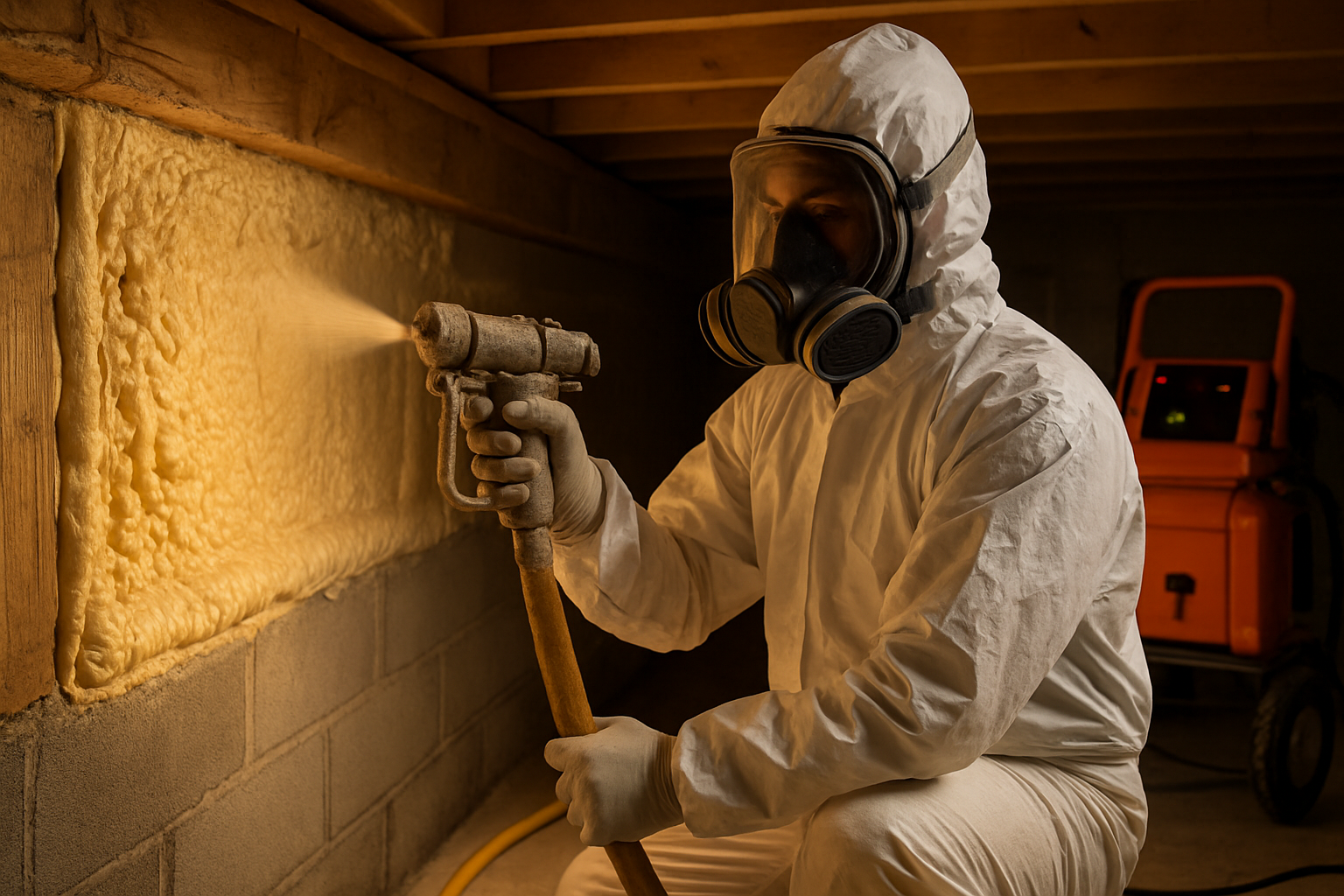
Most spray foam pricing guides are written for homeowners. They quote "per square foot" figures that leave out the one variable controlling your cost: thickness. If you're setting up your rate structure or reassessing jobs you've been undercharging, that framing gets in the way fast. Spray foam is bought, sold, and quoted in board feet — one board foot is one square foot of coverage applied at one inch of depth — and your spray foam insulation cost per board foot is the number that has to work before anything else does. This post covers open-cell versus closed-cell rates for 2026, how to factor your equipment investment into each job, and how to set a minimum charge that keeps small calls from running you into the red.
What is a board foot of spray foam, and why it changes every quote
A board foot of spray foam equals one square foot at one inch thick. That's the unit your material supplier invoices in, and it should be the unit you use when you price a job. The confusion with "per square foot" quoting is that it leaves thickness completely unstated — and thickness is where most of the cost lives.
Here's a concrete example. A 2,000-square-foot attic needs R-13 thermal resistance from open-cell foam. Open-cell delivers roughly R-3.7 per inch, so you need about 3.5 inches to hit that target. That's 7,000 board feet of foam — 2,000 sq ft × 3.5 inches — not 2,000 board feet. Price the job at 2,000 board feet and you've underbid the material alone by 71%.
The conversion is straightforward:
Board feet needed = area (sq ft) × desired thickness (inches)
You'll run this calculation differently by application. Rim joists typically get 2–3 inches of closed-cell. Cathedral ceilings in climate-controlled spaces may require 5.5–7 inches of open-cell to meet code. Wall cavities in new construction usually call for 3.5 inches of open-cell to fill the stud bay. The point is that "2,000 square feet" tells you almost nothing useful about material quantity until you know the target thickness.
Use the markup calculator to enter your board-foot rate and overhead; it handles the rest so you're not doing mental math on every job.
Open-cell vs. closed-cell spray foam cost per board foot in 2026
The two foam types serve different applications and have significantly different price structures. Both are measured in board feet, but closed-cell typically commands 2–3 times the per-board-foot rate of open-cell.
| Foam type | Installed cost per board foot | R-value per inch | Common applications |
|---|---|---|---|
| Open-cell | $0.44–$0.75 | R-3.5 to R-3.8 | Attic floors, interior wall cavities, soundproofing between floors |
| Closed-cell | $1.00–$1.65 | R-5.6 to R-7.0 | Rim joists, crawl space walls, exterior walls, roof decks, flood-prone areas |
Per Angi's 2026 spray foam insulation cost data, these installed ranges represent national averages including both materials and labor. Your regional market will move them 10–20% depending on local labor demand, material distributor pricing, and competitive pressure from other spray foam contractors in your area.
Closed-cell costs more for two concrete reasons. The raw polymer blend is denser — roughly 2 lbs per cubic foot versus 0.5 lbs for open-cell — making the material itself more expensive per set. And closed-cell cures faster and generates more heat, which means you apply it in thinner passes to avoid overheating and cracking. More passes equals more time and tighter quality control per board foot produced.
The installed rate in the table above covers your labor, your materials, and a margin. Your actual cost to produce a board foot — before overhead and profit — depends on what you pay your supplier for material sets and how long each foam type takes to apply in the conditions you work in.
What insulation contractor wages look like in 2026
Your labor cost is the foundation of everything else in your rate. The U.S. Bureau of Labor Statistics Occupational Outlook Handbook reports a median annual wage of $49,120 for Floor, Ceiling, and Wall Insulation Workers (SOC 47-2131) based on May 2025 employment data — approximately $23.62 per hour at a standard 2,080-hour work year.
That's the employed worker's wage. Your true cost per hour as a solo operator runs considerably higher once you account for the expenses that wages don't cover:
Payroll burden. Employer FICA contributions (7.65%), federal and state unemployment insurance, and similar taxes add 10–15% above wages before you touch any other costs. On $23.62/hr, that's another $2.36–$3.54/hr in required payroll-related expense.
Workers' compensation. Spray foam application carries a high WC classification in most states due to chemical exposure and respiratory hazard. Depending on your state rate table and experience modifier, expect 12–20% of payroll in WC premium. That adds roughly $2.80–$4.75/hr on top of wages.
Non-productive time. Drive time to the job, equipment warmup, masking and prep, teardown, and gun cleaning don't generate a single board foot, but they consume billed hours. On a job with four hours of productive spray time and four hours of mobilization and cleanup, you've used a full day of burdened cost to produce half a day of board feet.
Add those three up and $23.62/hr in wages costs a solo operator $32–$42/hr fully loaded, before general overhead and before any profit. To find your specific number, work through the process in how to calculate your minimum hourly rate as a solo contractor — it covers the exact overhead allocation that translates your real cost into a defensible floor price.
How to amortize your spray rig into every job
Equipment is the line item most new spray foam contractors underprice. A professional spray rig isn't optional — Froth-Pak disposable kits are fine for small gap-fill work, but they don't produce board feet at production volume. A contractor-grade setup includes a heated proportioner (the unit that mixes and pressurizes the two foam components), transfer pumps, a heated hose, a spray gun, and a power source — all mounted on a trailer pulled by a work vehicle.
According to Intech Equipment's Graco reactor listings, a Graco Reactor 2 H-XP2 proportioner runs around $29,940 in 2026. Add a transfer pump, 50 feet of heated hose, and a spray gun and the machine package alone is $35,000–$50,000. Factor in a trailer at $14,000–$16,000 and a used work truck or cargo van at $40,000–$60,000, and a complete production-ready setup runs $90,000–$130,000 before initial materials or insurance.
Per Oakridge Poly's spray foam startup cost breakdown, total business startup costs — including the rig, vehicle, insurance, licensing, and initial material stock — typically run from $118,000 to over $250,000 depending on whether you buy used or new and how you configure the system.
That capital has to come back through your jobs. A simple amortization approach: take your total equipment investment, assume a useful life of 5–8 years for the core rig components, divide by your expected annual job count, and treat the result as a per-job overhead line item. If your rig investment was $120,000 and you do 80 jobs per year across a 6-year equipment life, your equipment amortization comes to $250 per job minimum. That number needs to be embedded in your overhead recovery, not absorbed by your material margin.
If you're not doing this calculation, your jobs may look profitable on paper while your business quietly earns less than a salaried insulation tech would — before accounting for the six-figure asset on the trailer.
Setting a minimum job charge for spray foam
Most spray foam contractors lose money on small jobs — not because they mispriced the board feet, but because mobilization cost is fixed whether you spray 200 board feet or 2,000. Loading the rig, driving to the site, heating the lines, masking the area, spraying, cleaning the gun, and driving back takes four to six hours regardless of how small the spray area is. That time costs money at your fully loaded hourly rate.
The practical answer is a minimum job charge. Per Angi's 2026 spray foam insulation cost data, most spray foam contractors enforce a minimum of $1,500–$2,000 per mobilization. A homeowner who needs 150 board feet of closed-cell on a small rim joist section can't be quoted at 150 × $1.33/bf = $200 — that doesn't cover your drive time let alone your equipment warmup. You price it at your minimum, explain what's driving that floor, and let the customer decide whether to expand the scope to get more value from the call.
Spray foam material prices can also shift significantly mid-season based on chemical feedstock costs. Polyol and isocyanate pricing tracks petrochemical markets, which means a foam set that cost $X in spring may cost 10–20% more by fall. If your board-foot rate is built on a material cost from six months ago, you may be absorbing that swing in margin without realizing it. For a process to protect your materials markup when supplier prices move, see how to protect your materials markup in a volatile market.
Takeaways
- Spray foam is priced and sold in board feet: board feet = area (sq ft) × application thickness (inches). Mis-quoting the unit is the leading cause of underbidding spray foam jobs.
- The Spray Polyurethane Foam Alliance (SPFA) is the trade association for the industry and publishes SPFA-121, the estimating reference standard for spray polyurethane foam applications.
- Installed open-cell foam runs $0.44–$0.75 per board foot in 2026; closed-cell runs $1.00–$1.65 per board foot — the gap reflects material density, R-value per inch, and application complexity.
- The Bureau of Labor Statistics reports a median wage of $23.62/hr for insulation workers (SOC 47-2131, May 2025 data); fully loaded cost for a solo operator typically runs $32–$42/hr after payroll burden and workers' comp.
- A production-ready spray rig runs $90,000–$130,000+ in capital investment — amortize it per job or your per-board-foot rate will look profitable on individual jobs while the business under-earns overall.
- Enforce a minimum job charge of $1,500–$2,000 per mobilization to cover the fixed cost of setup and teardown on every call regardless of spray area.
Know your cost per board foot before you name a price
Market benchmarks tell you what customers will pay. They don't tell you whether that price covers what you actually spend on materials, equipment, labor, and overhead for a specific job in your market. A spray foam contractor who prices at the national midpoint without knowing their own cost floor is guessing — and the margin error on a misquoted job with six figures of equipment on the trailer is real money.
JobEstimator.ai lets you enter your loaded labor rate, overhead, and markup once and applies them automatically across every quote you build. That means your board-foot rate, your minimum charge, and your material cost are consistent job to job, not back-calculated from memory each time a customer calls. Plans start at $39/mo, which is less than the margin you lose on a single underpriced mobilization.