Painting labor rates by job type: walls, trim, and cabinets 2026
What painting contractors charge in 2026 for interior walls, exterior, trim, and cabinet refinishing—labor rate benchmarks by surface and job type.
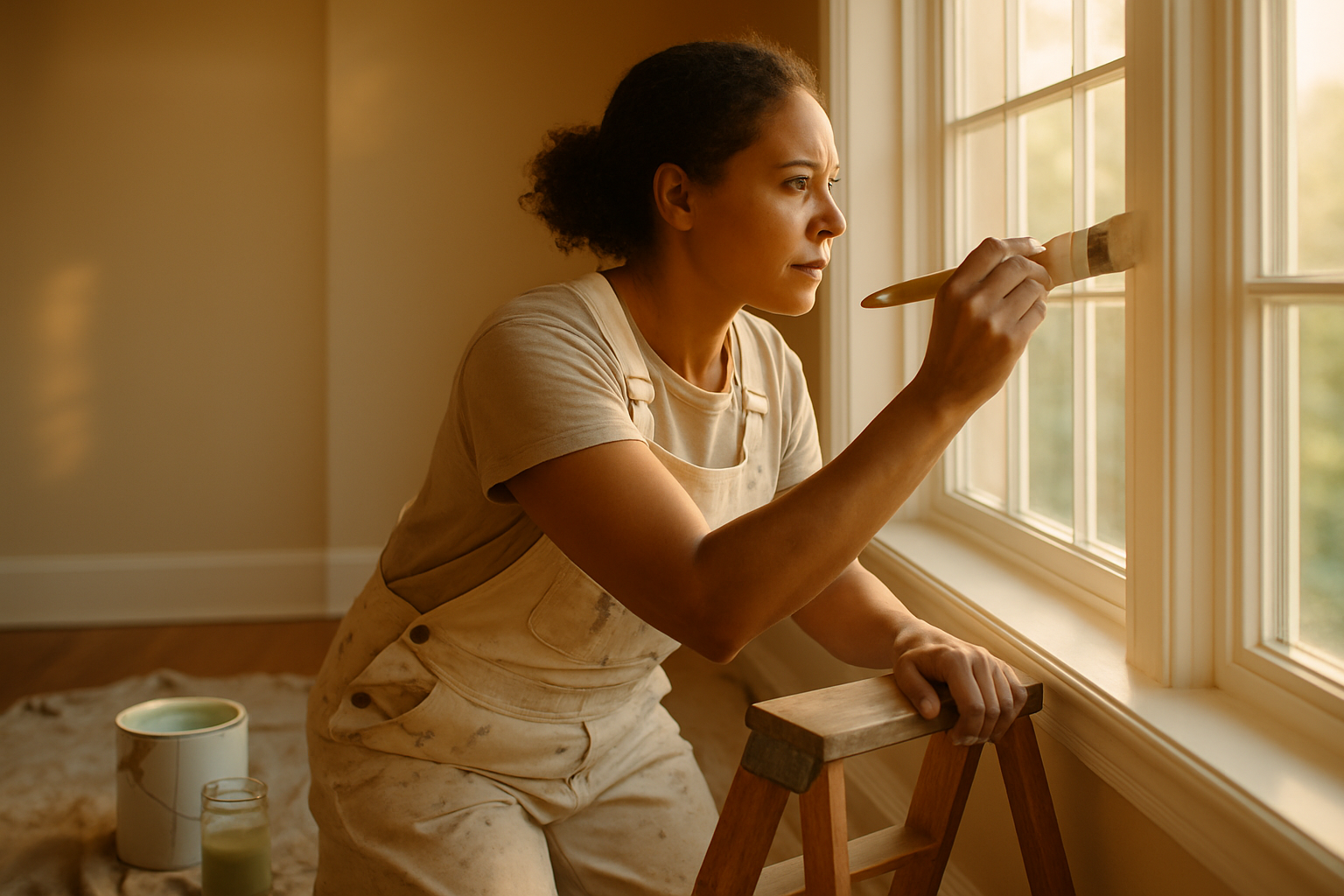
Most painting contractors set one number per square foot and apply it to every job. That works until the customer asks to have the kitchen cabinets done — and you've bid cabinet refinishing at the same rate you use for rolling an open living room wall. Now you're doing three times the prep and applying four careful coats instead of two, for the same money. Painting labor rates need to change by surface type. This post gives you a 2026 rate card broken down by job type so you can price interior walls, exterior work, trim, and cabinet refinishing at the right number for each.
Interior wall and ceiling painting rates in 2026
Interior walls are your fastest and most competitive scope. You're rolling flat surfaces at a high coverage rate, and every painter in your market can do the same work. The question is whether your rate recovers your costs at the speed you actually paint — not the speed you paint when everything goes perfectly.
Typical labor rate for interior walls: $1.50–$3.00 per square foot of wall surface area
This is a labor-only rate for two coats of finish paint on standard 8- to 9-foot walls in reasonable condition. The low end applies to large open areas — great rooms, long hallways — where you can keep the roller moving with minimal cutting. The high end accounts for more prep, rooms with significant millwork detail, or smaller spaces where your setup time is a larger share of your total hours.
According to HomeGuide's 2026 painting cost data, contractors nationally charge $1 to $3 per square foot of wall area for interior labor. In higher-cost metros — Boston, Seattle, the Bay Area — that floor moves up by $0.50–$1.00/sq ft.
A note on measurement: price per square foot of wall surface, not floor area. A 12×14 room at 9-foot ceilings has roughly 468 sq ft of wall area (two walls at 12×9 and two at 14×9, minus typical door and window openings). Floor area is 168 sq ft — if you accidentally price on floor area instead of wall area, you'll underbid the job by more than half.
Ceilings: $1.00–$2.50 per square foot
Standard flat ceilings with good access run toward the low end — rolling a ceiling is faster than rolling walls because you're working in one direction with no furniture to cut around. Popcorn texture, vaulted surfaces, or any ceiling above 10 feet push toward the high end. Coffered ceilings with multiple recessed panels price closer to trim work.
What raises your interior rate:
- Ceiling height above 9 feet: add $0.25–$0.50/sq ft
- Heavy texture or patches needing skim coat: add $0.50–$1.50/sq ft
- Dark colors requiring a third finish coat: add $0.25–$0.40/sq ft
- New bare drywall needing a sealer primer coat: add $0.30–$0.60/sq ft
Use the markup calculator to verify that your per-square-foot rate actually recovers your loaded hourly cost at your real production speed, not your best-day speed.
Exterior painting labor rates per square foot 2026
Exterior painting commands a premium over interior work for the same square footage. The reason is prep — scraping failing paint, pressure washing, spot-priming bare wood, and caulking gaps all take time before you roll a drop of paint — and job conditions outside affect your speed in ways that are hard to predict from the ground at bid time.
Typical labor rate for exterior siding: $1.75–$3.50 per square foot
This assumes light to moderate prep (scraping and spot priming), two coats of paint on single-story residential with reasonable ladder access. Single-story work at the low end, single-story with more prep or obstacle-heavy work in the middle.
Angi's 2026 painter pricing data shows exterior painting consistently runs 15–25% above comparable interior work on a per-square-foot basis, reflecting prep and access time differences.
Factors that push your exterior rate up:
- Two-story or higher: add $0.50–$0.75/sq ft. Moving ladders constantly kills production.
- Heavy peeling or failing paint: add $0.50–$1.25/sq ft. Scraping and wire-brushing large areas is slow work.
- Lead paint remediation: scope this separately. Disposal and containment costs vary by state and local requirements and can't be folded into a standard per-square-foot rate.
- Rough siding (stucco, weathered cedar, rough-sawn boards): add $0.25–$0.50/sq ft vs. smooth vinyl or smooth fiber cement — coverage rate drops on rough profiles.
- Soffit and fascia: typically priced as an add-on at $1.50–$2.50 per linear foot.
Trim, doors, and millwork: charge by linear foot
Linear-foot pricing on trim makes your estimates cleaner and protects you from scope creep. A straight baseboard is fast — you're cutting in a single horizontal line and back-rolling. A crown molding with inside corners, outside corners, and coped returns is slow — every corner requires a precise miter or coped cut and a careful fill with a small brush.
Bundling trim into your per-square-foot wall rate masks this distinction. When you use one combined number, every detail change becomes a renegotiation of the whole job. Separate lines mean separate conversations.
The guidance in our post on flat-rate, hourly, and per-square-foot pricing for painting contractors applies directly here: linear footage is usually the right unit for trim because the key variable is the run length and profile complexity, not the wall area behind it.
Typical labor rates for trim and millwork (2026):
| Surface | Typical labor rate |
|---|---|
| Baseboard (standard flat or rounded) | $1.00–$2.00 per linear foot |
| Window and door casing | $1.50–$2.50 per linear foot |
| Chair rail | $1.50–$2.50 per linear foot |
| Crown molding (standard profile) | $2.00–$4.00 per linear foot |
| Panel molding or wainscoting | $2.50–$4.50 per linear foot |
| Single interior door, both sides, all faces | $65–$125 flat |
Doors are better priced flat because a standard 6-panel door takes roughly the same time to cut in and roll whether it's in a powder room or a primary bedroom. Include both sides, all faces, and the door edge. Charge separately for double doors and custom millwork.
For small trim-only jobs — a room where the customer just wants the baseboard and casing painted — you may find hourly billing is cleaner than trying to map every linear foot. If you can't get a good count from the customer before you drive out, price it hourly with a not-to-exceed estimate.
Cabinet refinishing labor rates in 2026
Cabinets are where painters either build real margin or lose their shirt. The prep alone — cleaning with TSP or deglossing solution, sanding every door face and drawer front with 150-grit then 220-grit, wiping tack cloth before each coat — takes more total hours than painting the average bedroom. Combine that with multiple thin coats (cabinet finishes show brush marks and drips in a way wall paint doesn't), and you're looking at a completely different hourly production rate than any other surface in a house.
Typical labor rate for cabinet refinishing: $30–$60 per linear foot, or $6–$12 per square foot of door and drawer face
A standard kitchen with one full wall of base and upper cabinets — roughly 20 linear feet counting both sides — runs $600–$1,200 in labor at those rates. A larger kitchen with 30+ linear feet of cabinetry typically ranges from $900 to $2,500 in labor, depending on door count, drawer count, and the finish quality the customer is expecting.
HomeGuide's 2026 cabinet painting cost data places typical cabinet refinishing labor in this range, with the high end reserved for spray-applied finish work.
What commands the high end of cabinet rates:
- Fine-finish spray application (vs. brush-and-roll): standard premium over brush work
- Glass-front doors: add $15–$25 per door for careful cut-in on the glazing bars
- Two-tone or specialty finish: add $5–$10 per linear foot
- Customer-supplied paint: add 15–20% risk adjustment — unknown viscosity and untested sheen mean you absorb any adhesion or finish problems
- Hard factory-applied original finish (MDF with catalyzed lacquer): heavier prep, plan for additional hours
The U.S. Bureau of Labor Statistics reports a median annual wage of $49,400 for employed painters in construction and maintenance as of May 2025 — roughly $23.75 per hour. As a self-employed contractor, you carry self-employment taxes (15.3% on net earnings), your own health insurance, general liability coverage, and vehicle costs on top of what an employee takes home. Cabinet refinishing is the scope where you can earn back that overhead and still leave the job with a meaningful margin.
For a full look at how to structure your painting estimates — labor lines by scope, materials markup, exclusions language — our post on how to write a painting estimate covers the complete format.
Painting labor rates at a glance
Takeaways
- Interior walls are your volume scope, not your margin scope. At $1.50–$3.00/sq ft of wall area, you need to be efficient. Minimize setup time and avoid bundling trim into the wall rate.
- Measure wall area, not floor area. A 12×14 room has 468 sq ft of wall surface and only 168 sq ft of floor — pricing on floor area can cut your effective rate by more than half.
- Exterior work carries a real premium — plan for 15–25% above comparable interior rates — but watch prep scope closely because heavy peeling or difficult access eats that premium fast.
- Price trim by the linear foot, not the room. It makes scope changes cleaner and ensures your crown molding gets a different number than flat baseboard.
- Cabinet refinishing is your best-margin scope when you price it correctly. At $30–$60/LF or $6–$12/sq ft of face, you're compensated for prep-intensive work that takes genuine craft, not coverage speed.
Build winning quotes from your rate card
Knowing your rates by surface type is half the job. The other half is turning those numbers into a quote the customer reads, trusts, and signs quickly. A clear, itemized document — interior walls on their own line, trim on their own, cabinets on their own — lets customers understand exactly what they're paying for, and lets you negotiate scope changes without reopening the whole price.
If you're still building painting quotes in a spreadsheet, our painting quoting software guide covers when a dedicated tool pays for itself. JobEstimator builds itemized painting quotes automatically from your surface measurements. Plans start at $39/mo. If you want to check whether your current rates are actually covering your costs, run your last job through the markup calculator first — the number it returns will tell you fast. Start a quote at JobEstimator with no credit card required.