Plumbing maintenance plan vs. per-call pricing for solo plumbers
Should you offer a plumbing maintenance plan or stick with per-call pricing? Break-even math and comparison for solo plumbers with small books of business.
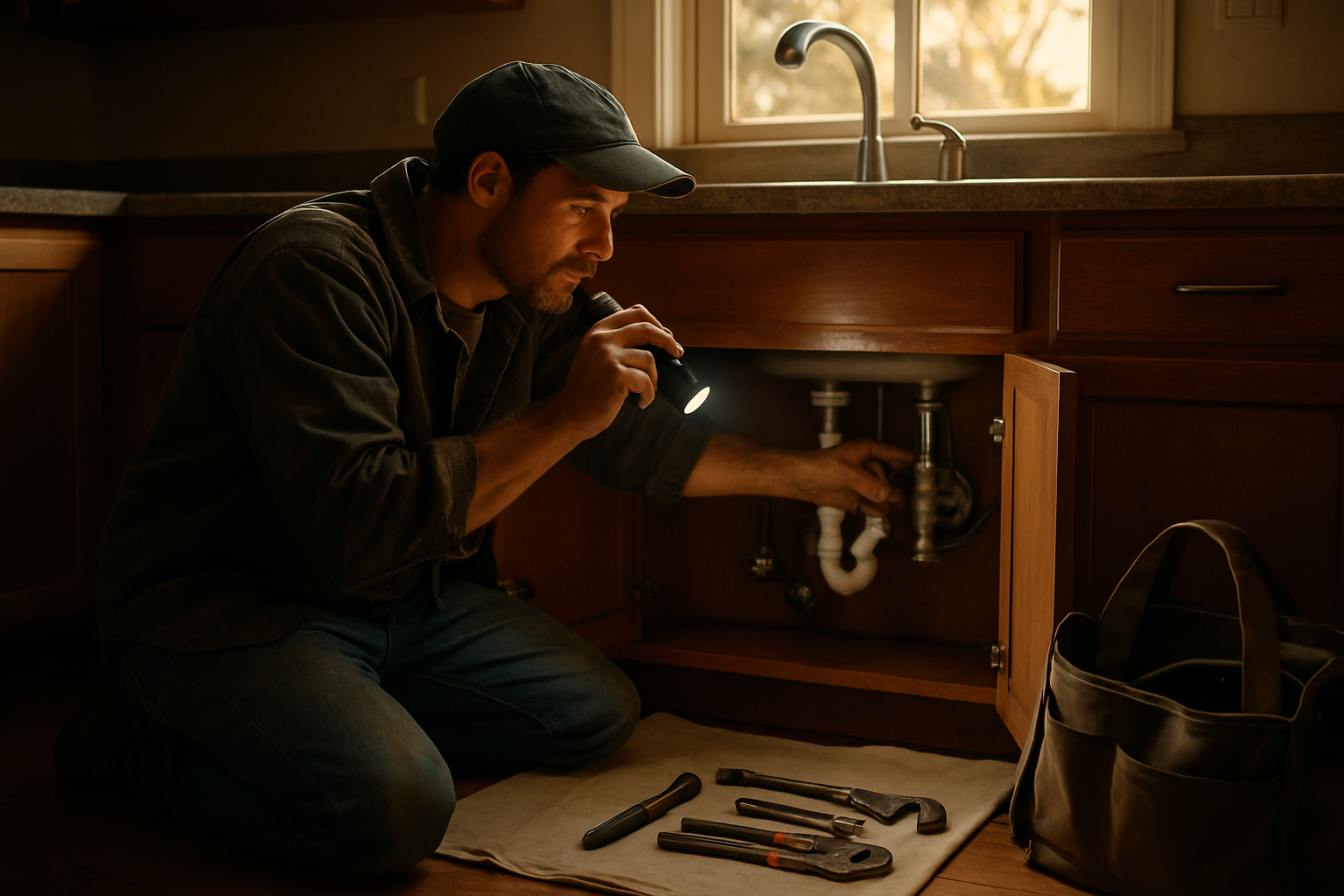
HVAC techs swear by maintenance agreements — two scheduled tune-ups a year, recurring revenue in the shoulder months, customers locked in before summer. You've probably wondered whether a plumbing maintenance plan would do the same thing for your solo shop. The honest answer is: sometimes yes, often no, and the difference comes down to whether your pricing actually covers what it costs you to show up. This post works through the break-even math, explains where per-call billing holds the edge, and gives you a clear-eyed comparison so you can decide with numbers instead of assumptions.
What a plumbing maintenance plan covers — and what it doesn't
A residential plumbing maintenance plan is a flat annual fee in exchange for a scheduled annual visit plus some form of service priority. The inspection scope varies by contractor, but a solid plan typically includes:
- Water heater flush and anode rod inspection
- Main shutoff and individual fixture shutoff function test
- Drain flow test (kitchen, bathrooms, laundry)
- Visible pipe and fitting inspection for corrosion or seeping joints
- Toilet flapper and fill-valve condition check
That's roughly 60–90 minutes of work, plus drive time. What the plan fee does NOT cover: parts, drain clearing, emergency repairs, or any work that comes out of the inspection. Those are billed separately at your regular rates.
On pricing: franchise plumbing operations that publish their plan rates publicly offer a useful benchmark. Service Today Inc. lists residential protection plans starting at $20–$35 per month ($240–$420 per year), covering annual inspections and priority scheduling. Benjamin Franklin Plumbing's published plan guidance shows basic coverage starting around $168/year. Independent solo plumbers typically price lower — $149–$250/year is common — partly from market pressure and partly because they're not packaging in the franchise overhead.
Before you set a price, you need to know your cost. The markup calculator at /tools/markup-calculator is a useful place to run the numbers before you quote your first customer.
Per-call pricing: where it holds the advantage
Per-call billing is simple: you price the job, you do the job, you collect for the job. No advance commitments, no renewal reminders, no tracking which customers are due for an annual visit, and no hard conversations when a plan member's pipe bursts and expects a discounted repair.
Per-call stays ahead in several specific situations:
- Your customer base is still growing. Locking your schedule into annual plan visits limits your availability for new one-time customers — the calls that expand your reach early on.
- Your work is mostly reactive and non-repeating. If 80% of your calls are random repairs with no obvious annual maintenance cycle, a plan doesn't give customers a clear reason to sign up.
- You're already fully booked. A plan only makes financial sense if it fills otherwise empty calendar slots. If your phone rings consistently, a plan just reroutes existing revenue without adding to it.
For going rates on what a solo plumber should be billing per service visit, see our plumbing service call pricing guide.
The break-even math no one runs for you
This is where most plumbers get it wrong. They look at $199/year per customer and think "that's nice recurring revenue." They don't run what it actually costs to fulfill.
The U.S. Bureau of Labor Statistics reports a median wage of $30.27 per hour for employed plumbers as of May 2024. That's an employee wage. As a solo operator, you're covering self-employment taxes, liability insurance, vehicle costs, and tools on top of your own pay — which means your effective hourly cost to yourself is considerably higher than that. For what the full market rate range looks like for solo plumbers, see our plumbing service call pricing guide.
An annual plumbing inspection runs 60–90 minutes on-site, plus 15–30 minutes of drive time each way. Call it 1.5–2 hours total time out of your day per visit. Add $15–$25 in supplies (anode rod inspection consumables, shutoff valve lubricant, drain test supplies).
At $100/hr effective labor cost:
| Plan price | Fulfillment cost (1.5 hrs + supplies) | Margin per customer |
|---|---|---|
| $150/yr | ~$170 | −$20 (loss) |
| $199/yr | ~$170 | +$29 |
| $250/yr | ~$170 | +$80 |
| $299/yr | ~$170 | +$129 |
The chart below shows this visually. The red dashed line is the approximate fulfillment cost at 1.5 hours of your time plus supplies. Bars below that line mean you're subsidizing the visit.
The math changes significantly if your visits run longer or you're driving further. A 2-hour visit at $125/hr already costs you $270 to fulfill — more than a $250/year plan recovers on its own.
That's not a reason to avoid plans. It's a reason to price them correctly from the start.
The real business case: plan customers repair more
The plan fee alone rarely justifies the model. The real argument for plumbing maintenance plans is what happens during the inspection visit.
When you're in a customer's home for a scheduled annual inspection, you find things: a water heater with a corroded anode rod that should be replaced, a shutoff valve that's seized and needs to be exercised or replaced, a slow drain that wants clearing before it backs up. Those findings get billed separately at your regular rates. The inspection is the vehicle that gets you in front of the customer; it's not supposed to cover everything that comes out of it.
JB Warranties, which works with independent plumbing contractors on service agreement programs, notes that plan customers tend to approve maintenance repairs more readily than cold-call customers — you're already there, the problem is visible, and the customer already trusts you enough to have signed up for the plan. On an older home with deferred maintenance, a single inspection visit regularly surfaces one or more additional jobs billed at your standard rates on top of the plan fee.
That changes the total customer value equation considerably. A customer paying $199/year for a plan, plus a repair job found during the inspection at your standard rates, ends up worth significantly more per year than a reactive-only customer who might call once every two or three years. The plan customer calls you first and is far less likely to shop around between calls.
See our drain cleaning pricing guide for what to charge when inspections surface drain issues that need addressing.
The solo priority-service problem — and how to define it honestly
Most plumbing maintenance plans include a priority service commitment: plan members get bumped up the call queue when they need a repair. That's a reasonable selling point. It's also a promise you need to define precisely before you make it.
If you're a solo plumber with 40 plan members, you cannot guarantee same-day service to all of them. A burst pipe at 11pm while you're already on another emergency call is not something a priority promise can fix. If you've implied same-day response and a plan member waits three days, you've created a customer service problem and undermined the plan's renewal value.
A workable and honest priority commitment for a solo shop sounds like: "Plan members get a callback within two hours and scheduling within one business day for non-emergency service." That's a meaningful benefit — most plumbers take 24–48 hours to return calls — and it's a promise you can actually keep.
Write it into your plan agreement before you sell the first customer, not after. If a plumbing service agreement is a new thing for your shop, the same principles that apply to HVAC agreements apply here — see our breakdown of service agreement vs. per-call pricing for HVAC contractors for how to structure the written commitment.
When a plumbing maintenance plan makes sense for a solo shop
A plan is worth building if most of these apply to your business:
- You have 25 or more repeat residential customers who already call you at least once a year. That's a base you can offer a plan to without needing to generate new leads first.
- Your service area includes homes that are 30 or more years old. Older homes have more annual maintenance value: shutoffs that need exercising, water heaters past their prime, supply lines that need inspection. A modern home built five years ago has less to find.
- You've installed water heaters for existing customers. The annual flush is a natural plan anchor — you're already the person who knows that unit.
- February and March are slow for you. Annual inspection windows in late winter or early spring fill calendar time that would otherwise sit empty. The seasonal economics are different from HVAC (which has a clear spring/fall PM window) but the principle holds.
- You have a working system for renewal reminders and payment collection. Without that, you'll do the work and forget to renew, or customers will let plans lapse because nobody followed up.
If fewer than three of these describe your situation, stay with per-call billing. A plan you under-price or can't operationally sustain is worse than no plan.
Takeaways
- A plumbing maintenance plan fee often does not cover fulfillment cost on its own — the plan makes financial sense only when you price it correctly ($199/year or above at typical labor rates) and bill separately for repairs found during visits.
- Per-call pricing keeps more flexibility, requires less admin overhead, and outperforms plans when your customer base is still growing or your schedule is already full.
- The real business case for plans is repeat repair revenue: plan customers find $200–$600 of repair work per annual inspection on average, and approve it at higher rates than cold-call customers.
- The "priority service" promise needs a specific written definition before you sell your first plan. For a solo shop, "callback within two hours, scheduling within one business day" is achievable and meaningful.
- Start with 10–15 of your most loyal existing customers before building a marketing campaign around the program.
Run the math before you set your first plan price
The biggest mistake plumbers make when launching a plan is setting the price based on what sounds reasonable and what competitors charge — not on what it actually costs to fulfill. One plumber who prices 30 plans at $149/year when $199/year would have held just fine has locked in $1,500 of foregone annual revenue for the next 12 months.
Before you quote your first customer, map out your real per-visit cost: your loaded hourly rate, your typical drive time to residential accounts, and your inspection supplies. JobEstimator is built for solo trade contractors who price from real cost inputs. If you're setting up a maintenance plan program for the first time, the Solo plan starts at $39/mo and includes the tools to work through that math before you make a commitment you'll spend a year living with.
Sources
- https://www.bls.gov/oes/current/oes472152.htm
- https://www.bls.gov/ooh/construction-and-extraction/plumbers-pipefitters-and-steamfitters.htm
- https://blog.jbwarranties.com/plumbing-service-agreements-guide-for-contractors
- https://www.servicetodayinc.com/plumbing/service-plans/
- https://www.benjaminfranklinplumbing.com/waco/blog/2025/march/is-a-plumbing-maintenance-plan-worth-it-heres-what-you-need-to-know/