How to write a door installation estimate
A contractor's step-by-step guide to writing a door installation estimate — covering labor, materials, disposal, framing scope, and protecting your margin.
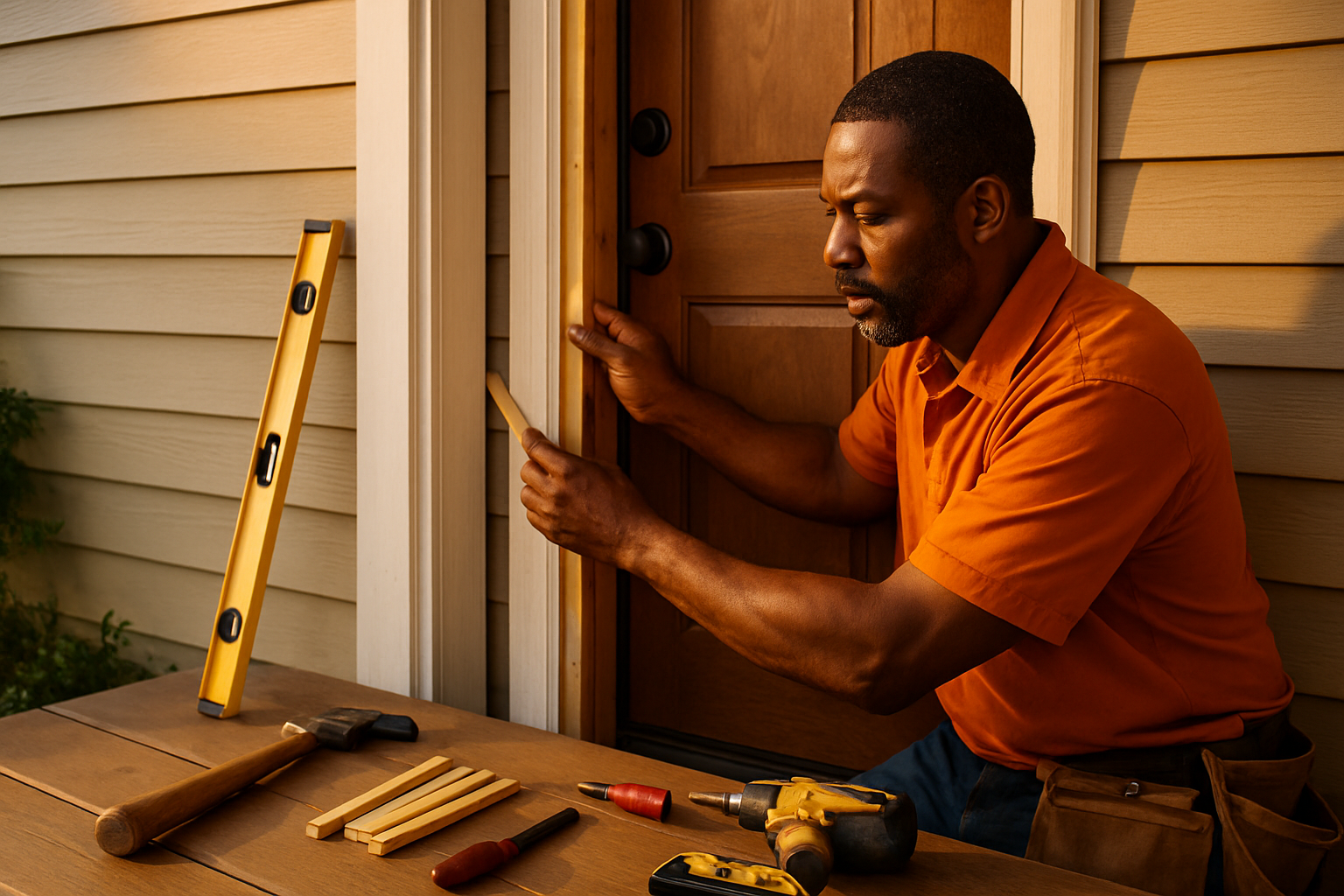
A door installation job can look like a two-hour swap and turn into a half-day of framing, rot repair, and a trim callback — all because the door installation estimate didn't cover what was actually there. The difference between a clean ticket and a money-losing one usually isn't the door itself; it's the language around the opening. This guide walks you through how to write a complete, airtight estimate for any door job, whether you're hanging a basic interior prehung or cutting a new exterior rough opening from scratch.
The four core line items in a door installation estimate
Every door installation estimate, regardless of the job, comes down to the same four categories. Price them consistently and the rest is just scope refinement.
1. Door unit cost
This is the material cost for the door — prehung or slab, interior or exterior, standard or oversized. When you're supplying the door, this line carries your material markup, not just your cost. Run your markup number consistently every time using the markup calculator: if you're paying $340 wholesale for a steel exterior prehung, a 30% margin puts the billable line at $485. That's not optional padding; it's covering your time to source, transport, and manage the material.
2. Labor
Your labor charge is your hourly rate times the hours you actually expect to spend — not a compressed number because you want to win the bid. Interior prehung swaps in an existing rough opening run in the 2–4 hour range for most experienced carpenters. Exterior doors take longer: plan for 4–6 hours on a basic swap because of flashing, threshold adjustment, weatherstripping, and the tighter tolerances required to prevent air and water infiltration.
The U.S. Bureau of Labor Statistics Occupational Employment and Wage Statistics reports a median annual wage of $60,580 for carpenters (SOC 47-2031) based on the May 2025 release — roughly $29 an hour at median. Solo contractors running their own businesses carry overhead, liability insurance, and profit obligations that require billing well above median employee wages to break even. Don't let national medians anchor your rate below what the work costs you to do.
3. Removal and disposal
Pulling the old door and frame, stacking it, and hauling it off takes real time. If the customer wants to keep the old door, note it. If you're hauling it, you're spending time and possibly dump fees. Either way, it belongs on its own line — not buried in labor, and definitely not assumed to be free.
4. Trim, hardware, and weatherstripping
Interior doors need casing on both sides and a stop. Exterior doors need weatherstripping, a sweep or threshold, and exterior caulk. Hardware — locksets, deadbolts, hinges if they're not pre-mortised — is a separate line. These items are easy to skip in a fast estimate. Skipping them means you're buying them on-site out of your own margin.
For a closely related trade, see the guide to window installation estimates — the structure there is nearly identical, and the same scope discipline applies.
Scope factors that drive your door installation price
Your labor and materials numbers follow directly from which scenario you're in. There are four:
Interior, existing opening: The cleanest job. You're shimming and setting a prehung door into a frame that already exists, nailing the jamb, and trimming both sides. If the existing frame is sound and reasonably plumb, this is your best candidate for a flat rate.
Interior, new rough opening: Now you're cutting into a wall. You'll need to frame the rough opening — king studs, jack studs, a proper header — patch or hang drywall on both sides, and then install the door. This is a half-day minimum regardless of door size. Get a clear look at the wall before quoting; a load-bearing wall changes the header sizing and the complexity entirely.
Exterior, existing opening: A prehung swap on an exterior door requires flashing tape above the rough opening, a new threshold, weatherstripping, and exterior caulk along the brick mold or trim. It takes meaningfully longer than an interior swap, and there's less margin for sloppiness. If the existing frame is out of plumb, budget extra time or include a note in the scope.
Exterior, new rough opening: The most complex scenario. Load-bearing versus non-load-bearing determines your header and whether you need a structural engineer's input. In most jurisdictions, a new exterior rough opening requires a permit — the homeowner typically pays the permit fee, but confirm this in the estimate rather than assuming.
What to include in the scope section to prevent disputes
The price line isn't what costs you money on door jobs — it's missing scope language. Write these into every estimate, every time:
-
Pre-existing damage clause: "Estimate assumes sound framing, sheathing, and trim at the rough opening. Any rot, water damage, or structural deficiencies discovered during installation will be addressed per a written change order at [$X/hour]." This one sentence covers the most common door job surprise: you pull the old casing, and there's black rot all the way through the sill.
-
Door supply statement: If you're supplying the door, spec it: manufacturer, product code, size, jamb depth. If the customer is supplying it, write: "Customer to provide [32"×80" prehung, 4-9/16" jamb]. Labor price assumes door is on-site and meets rough opening dimensions. Delays, returns, or re-installs due to incorrect sizing billed at [$X/hour]."
-
Paint and finish: Interior doors generally need paint after install; exterior doors need caulk. Either include it in scope or explicitly exclude it. "Priming and painting not included" is four words that prevent a callback two weeks later.
-
Hardware installation: A lockset takes 20–30 minutes to install. If you're handling it, it's in scope. If the customer is doing it, it's not. Don't leave it ambiguous.
The same discipline that makes a change order airtight applies here — your estimate scope section becomes the baseline against which any future changes get measured.
Pricing when you supply the door vs. customer-supplied
This question changes your estimate structure, and it comes up on nearly every door job.
You supply the door: You're a materials provider and an installer on the same ticket. Price the door at your landed cost plus markup, consistently. You're carrying the risk of ordering errors, freight damage, spec mismatches, and the time to coordinate delivery. A 25–35% markup on the door unit is standard for most trade contractors supplying materials.
Customer supplies the door: Your estimate is labor-only for the installation. You need to specify the door dimensions, jamb depth, and rough opening requirements the customer must match. State what happens if they get it wrong: "If the supplied door requires modifications beyond standard shim adjustment, additional labor will be billed per the change order rate."
Protect yourself on customer-supplied jobs: if a customer brings the wrong-sized door and you make it fit with extra blocking and shimming, that's a change order — not part of the original labor quote. The time to have that conversation is before the door arrives, not after.
Takeaways
- Build every door installation estimate around four line items: door unit, labor, removal and disposal, and trim and hardware. Don't bundle them.
- Know your scenario — existing opening vs. new rough opening, interior vs. exterior — before you quote. Moving from the simplest scenario to the most complex roughly doubles the scope.
- Write a rot-and-damage clause and a door supply statement into every estimate. These two sentences prevent the most common disputes.
- Mark up the door unit consistently if you're supplying it. Use a markup calculator, not rough memory.
- Permits for new exterior rough openings are usually the homeowner's cost — but confirm it in the estimate so it's not in dispute later.
Putting your door installation quote together
Once you've got scope mapped and line items priced, your quote document needs: your business name and license number, the job address, the date and scope of your site visit, an expiration date (30 days is standard), a line-item breakdown, and clear payment terms. That format protects you legally and shows the customer they're dealing with someone who runs a real business.
JobEstimator generates this kind of structured, line-item quote from a voice or text description of what you found on-site. You describe the job, it builds the estimate. Useful if you're writing three or four door installation quotes a week — plans start at $39/mo.