How to write a window installation estimate
Step-by-step guide for window contractors: price a window installation estimate by window type, mark up materials, add scope exclusions, and win the job.

Window jobs look like a clean, repeatable trade from the outside. In practice, every opening has its own set of surprises — a rotted sill, a header that's one story up, trim that needs more work than the window itself. Getting the window installation estimate right before you start is the only way to protect your margin when those surprises show up.
This guide walks you through every line: how to price labor by window type, how to mark up materials, and what scope language to write so you're not eating the cost of hidden framing damage. By the end you'll have a reliable line-item structure you can repeat on every quote.
What to look at before you write one number
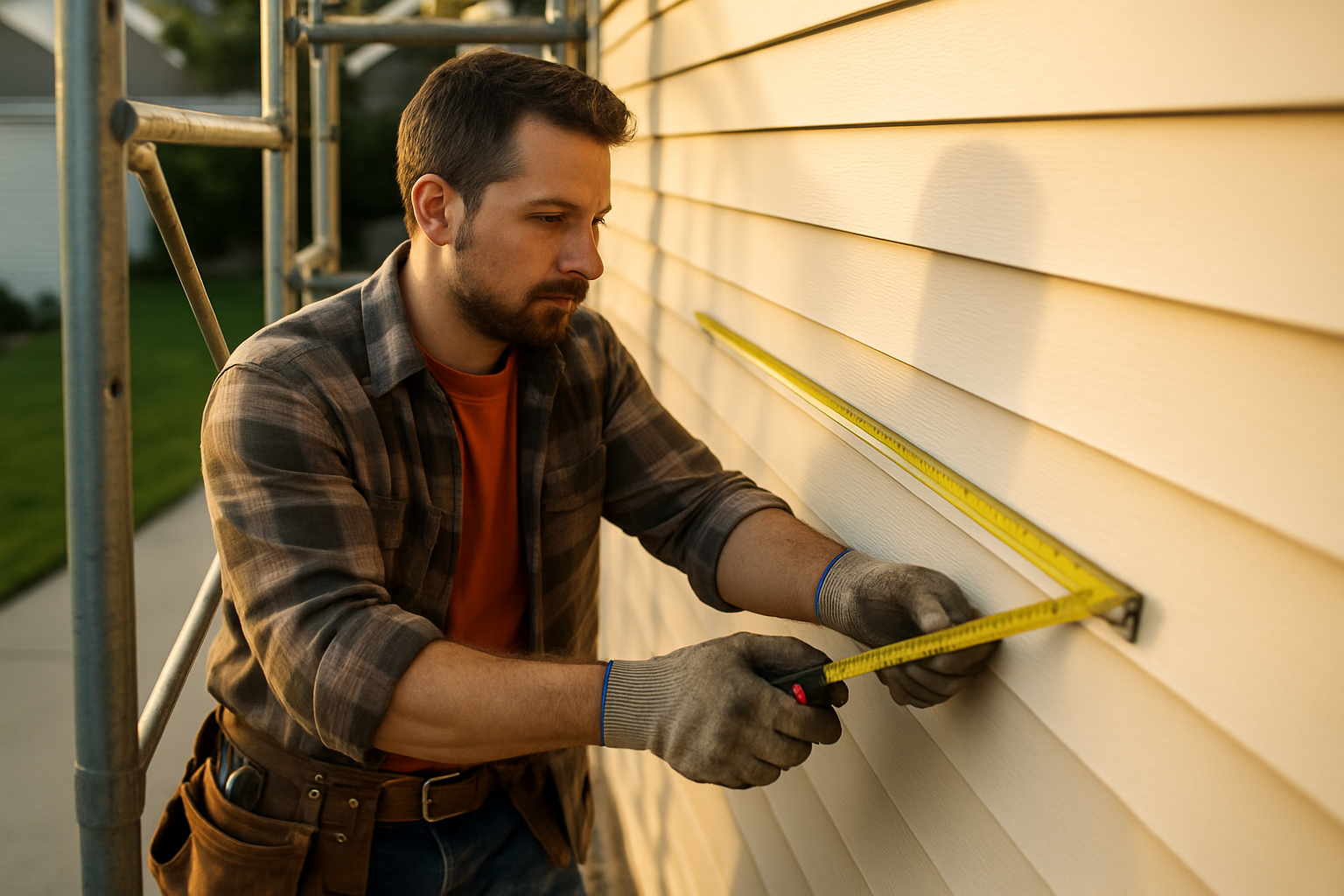
Your estimate is only as accurate as your site visit. Before you quote any window job, document these six things:
- Opening dimensions — measure rough width × height on every opening, not just a sample. Odd-size openings mean custom orders and longer lead times.
- Replacement method — insert/retrofit (new sash into existing frame) or full-frame (complete removal including the frame, jamb, and casing).
- Frame condition — probe the sill and corners for soft wood. If the frame is rotted, a retrofit won't work and the job price changes entirely.
- Story height and access — ground-floor vs. second-floor vs. third-floor work are different jobs. Note whether you'll need a scaffold or lift rental.
- Trim scope — will you be reinstalling interior stool and apron? Exterior casing? Repainting is almost always excluded, but write it down.
- Permit requirement — many jurisdictions require a permit for window replacement. Call your local building department if you're not certain; pass the fee through as a disclosed line item.
A simple site-visit checklist prevents the two most common window misquotes: a missing line item and undefined scope.
How to price window installation labor per window
The most reliable approach is hours × burdened rate, not a flat per-window fee. Flat fees hide the real cost difference between a quick insert on the first floor and a full-frame replacement on the second.
Step 1: Build your burdened hourly rate
The U.S. Bureau of Labor Statistics reports a national median hourly wage of $31.55 for carpenters (May 2025 OEWS data). Add payroll taxes (7.65%), workers' compensation (3–6% for window work), and general liability (2–3%) and your all-in burdened rate lands around $43–$48/hr for a median-market installer. In high-cost metros — New York, Seattle, San Francisco — expect $55–$70/hr burdened.
If you haven't calculated your exact minimum hourly rate yet, this guide walks through the formula.
Step 2: Estimate install time by window type
| Window Type | Install Hours per Unit | Notes |
|---|---|---|
| Insert / retrofit | 1.25 – 1.75 hrs | Existing frame stays; fastest option |
| Full-frame, standard size | 2.0 – 2.75 hrs | Frame removed; requires new flashing and trim reset |
| Full-frame, large or specialty | 2.75 – 3.5 hrs | Bay, bow, picture, oversized; often two-person |
| Second-story access | Add 0.75 – 1.5 hrs | Per window; account for scaffold or ladder setup |
Use the midpoint for average conditions. Add time for pre-1980 homes with non-standard rough openings, lead paint on frames, or windows set into corners where trim complexity increases.
Step 3: Calculate your billed labor
Multiply your burdened rate by install hours, then price to your margin target. Example at $46/hr burdened at 30% gross margin:
- Retrofit, 1.5 hrs: $69 cost → bill $99/window
- Full-frame standard, 2.4 hrs: $110 cost → bill $157/window
- Full-frame large, 3.1 hrs: $143 cost → bill $204/window
Add a job-level labor charge for site setup and final cleanup — plan 1.0–1.5 hours for a typical 10-window job.
Materials pricing and markup on a window installation estimate
Window job materials have two components: the units themselves and the installation consumables.
Window units
Get a supply quote from your distributor before you lock in the estimate. Standard double-hung double-pane windows run roughly $180–$350 each at wholesale; casements and specialty shapes run $350–$900. Mark up the unit cost at 25–35% — window units are expensive to transport carefully, carry breakage risk until installed, and create return logistics when they arrive damaged.
Use the markup calculator to find the exact sell price and gross margin for any supply cost and margin target.
Installation consumables
List these as a separate line item — it makes the estimate transparent and protects you if supply prices shift between quote and job date:
- Low-expansion foam, flashing tape, shims, and fasteners: $15–$25/window
- Exterior silicone caulk (roughly one tube per 2–3 windows): $6–$10/window
- Disposal fee for old window units: $15–$30/window, or a flat $150–$200 per truck load
Apply the same markup percentage to consumables as to window units.
Energy Star windows: calling out the upsell
Many homeowners have heard of Energy Star windows but don't know what the upgrade costs in dollar terms. Energy Star certified windows meet efficiency thresholds set by the U.S. Department of Energy's Energy Star program — typically a U-factor of 0.30 or lower for northern climates. The material cost upgrade from a basic double-pane unit to a certified one runs $150–$350 per window depending on the glass package and frame material.
When your site visit reveals south- or west-facing windows in a drafty or hot house, quote both options on the same document: standard glass and Energy Star. The incremental margin on the upgrade is the same percentage as the rest of the materials line — more dollars at the same margin target. That's an easy $150–$300 in gross profit per window if the homeowner takes the upgrade.
If you're quoting windows alongside siding on an exterior job, how to write a siding installation estimate covers the same line-item structure for the cladding side.
What to include, what to exclude, and why writing it down matters
Include in your base estimate:
- Removal and disposal of existing window units
- Rough-opening preparation: flashing tape, low-expansion foam, shims
- Exterior caulking to a weathertight standard
- Interior trim reinstall, if existing trim is undamaged and the scope calls for reinstall
- Jobsite cleanup and debris removal
Exclude explicitly in writing:
- Rot, water damage, or structural repair to framing, sills, or headers
- New interior or exterior trim installation (as opposed to reinstalling existing trim)
- Painting, staining, or finishing
- Mold or moisture remediation
- Permit procurement (list the permit fee as a disclosed pass-through if you're pulling it)
Write these exclusions on the estimate itself — not buried in a terms-and-conditions page. When you open a wall and find a rotted header, the written exclusion on the customer's copy of the estimate is the document you hand them with the change order. For exact language that holds up during a scope-change conversation, see how to write a change order that protects your margin.
A sample window installation estimate, line by line
Here's a 10-window full-frame replacement job built out as a complete line-item estimate:
- Labor — installation: 10 windows × 2.5 hrs avg × $46/hr burdened = $1,150 cost → billed at $1,643 (30% margin)
- Labor — site setup and cleanup: 1.5 hrs × $46 = $69 cost → billed at $99
- Window units: $3,200 supply cost, 25% markup → billed at $4,267
- Installation consumables (foam, tape, shims, fasteners): $220 supply → billed at $293
- Exterior caulk: $80 supply → billed at $107
- Window disposal: $180 flat
- Permit fee (pass-through): $150
Estimate total: $6,739
Gross margin on lines 1–5: approximately 28%.
This structure does two things a lump-sum quote can't. First, it shows homeowners exactly what each dollar buys, which reduces price negotiation on the total. Second, it makes the change-order conversation straightforward: when you find a rotted sill on unit 4, the framing repair is a new line item, not a fight over why the original number changed.
Takeaways
- Measure every opening before you quote. Install-time differences between window types are large enough to flip a profitable job into a breakeven one.
- Build your labor rate from your actual burdened cost, not a flat per-window average — your wages, your insurance, your market.
- Mark up window units 25–35% and consumables at the same rate. Materials are a profit center, not a pass-through.
- Write every scope exclusion on the estimate document itself. Framing damage, trim installation, and painting are the three most common scope-creep triggers on window jobs.
- Have a change-order template ready before day one. You will use it.
Get every window quote right the first time
Window installation estimates have more moving parts than most residential jobs — window type, story height, framing condition, markup on high-value units, and a list of scope exclusions that protects you if the wall opens to a surprise. Getting them right on the first pass means fewer revision conversations and more margin that survives to the final invoice.
JobEstimator is an AI quote generator built for trade contractors. Describe the job scope in plain English and it assembles a line-item estimate — labor, materials, and markup — in seconds. Plans start at $39/mo. If you're writing window estimates manually today, that's typically 20–30 minutes per quote you can reclaim.