How to write a fence installation estimate
How to scope and price a fence job: linear-foot pricing, material tiers, labor hours by fence type, and markup for wood, vinyl, and chain link.
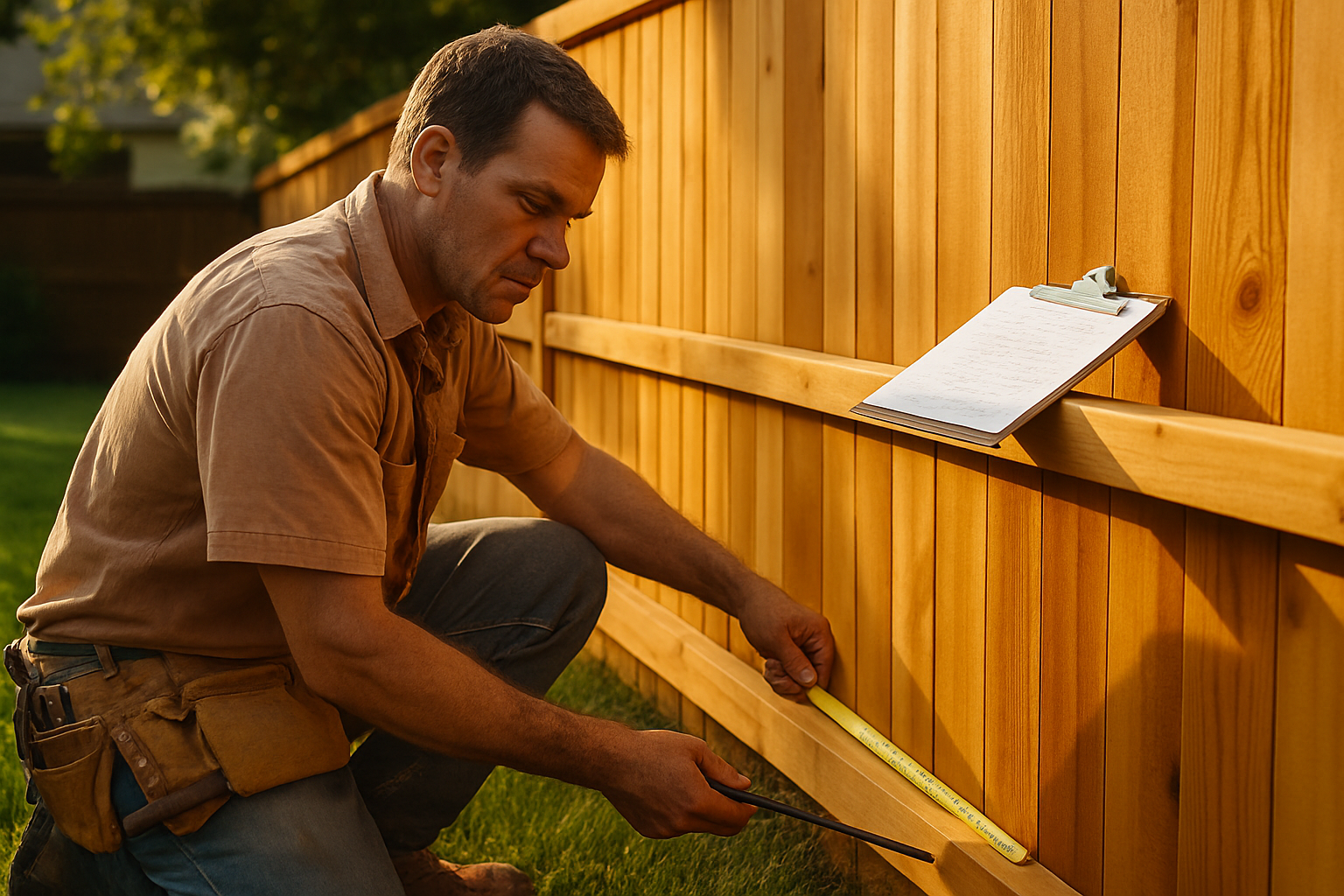
Every fence estimate has the same trap: you quote over the phone based on the linear footage the customer gave you, you show up on-site, and you find a sloped lot, three gate openings, rocky soil, and a section that dog-legs around a shed. The job costs you 30% more than you bid. Learning how to write a fence installation estimate that holds starts before you open a quote form—it starts on-site with a full scope of what's actually there.
This guide covers the site walk, linear-foot pricing by fence type, labor hour estimates, terrain and gate add-ons, and how to apply markup before the number leaves your hands.
Do the full site walk before you write a number
The most common fencing estimating mistake is quoting from a phone description. You miss the variables that move the price:
- Total linear feet. Walk and measure every run yourself. Customers almost always undercount—they forget the side gate return, the short run along the garage, or the section that jogs around a utility box.
- Corner count. Each corner requires a dedicated post, and corners are where panel alignment takes the most time. Count them separately.
- Gate openings. Count every gate and measure the opening width. A standard walk gate (36–48 in.) is fast to install. A double drive gate or a sliding gate adds hours and changes the post and hardware spec entirely.
- Terrain. Look for slopes, roots, rock, or wet soil. Sloped lots mean you either step the panels in sections or rack them to follow the grade—either way adds labor. Rocky or sandy soil changes your footing depth and concrete volume.
- Existing fence. If the customer needs the old fence pulled, that's a demolition and disposal line, not a rounding error in your total.
- Permit requirements. Many jurisdictions require a fence permit for structures over 4 feet, and some HOAs add their own approval step. Confirm before you quote—permit fees are a pass-through, not part of your markup.
Write all of this down during the walk. Every variable you catch on-site is one you won't have to renegotiate mid-job.
Choose per-linear-foot or itemized pricing
Most fence contractors use one of two methods:
Per-linear-foot pricing builds materials, labor, overhead, and margin into a single number per linear foot. It's fast to write and easy to explain. You say "$38 per foot for a 6-foot cedar privacy fence, installed," and the customer can do the math themselves. It works well for clean, flat jobs under 200 linear feet with a single fence type.
Itemized pricing breaks the quote into separate line items: materials, labor, concrete, hardware, gate components, demolition, and permit. It takes longer to write, but it protects your margin when lumber swings in price between bid day and delivery. It also gives you room to negotiate on a single line if a customer pushes back, without touching your labor rate.
For anything with multiple fence types, gates on more than one opening, or terrain complications, go itemized. Before you finalize either format, use the markup calculator to verify your per-linear-foot rate already covers overhead and profit.
Price by fence type: wood, vinyl, and chain link
Material cost is the largest variable in a fence estimate, and it shifts significantly by fence type. Get the customer's exact material spec confirmed before you price—"vinyl fence" can mean anything from a basic 4-foot picket to a 6-foot tongue-and-groove privacy panel with a routed top cap.
Here's a labor comparison by fence type to guide your estimate planning. All figures assume a two-person crew on flat ground, per Fence Installation Authority:
Chain link has the lowest material cost, but don't underestimate it. Tensioning the fabric correctly on long runs, setting corner and end posts plumb, and dealing with line post spacing takes more time than it looks. It's also the hardest to rack on a slope—you typically have to step it or deal with uneven fabric gaps at grade.
Wood privacy (cedar, pressure-treated pine, spruce) is the most common residential fence request. Material cost varies significantly by species and current lumber pricing—cedar runs considerably more than pressure-treated pine, but it holds up without treatment. Check your supplier for current board pricing before you finalize any bid; lumber costs have moved enough in recent years that a price from three months ago may no longer be accurate.
Vinyl has the highest upfront material cost of the three, but you eliminate painting, staining, and much of the long-term warranty exposure. Rails and posts typically run 30–50% more than equivalent wood components. The tradeoff: vinyl panels can only be stepped on slopes, not racked, so sloped lots add more visible stair-step transitions.
Aluminum ornamental is priced per panel, not per linear foot in the traditional sense, because panels come in fixed widths and heights. Get the exact panel spec (picket spacing, rail count, finial style, gate frame size) before you quote—two aluminum fence systems that look similar can differ by 40% in material cost.
Estimate labor hours properly
According to the U.S. Bureau of Labor Statistics May 2023 Occupational Employment and Wage Statistics survey, the median hourly wage for fence erectors (SOC 47-4031) is $21.35. Your fully-loaded labor rate is higher once you factor in payroll taxes, workers' comp, and benefits—most fence contractors budget a loaded labor cost of $45–$65 per hour when building estimates.
Use the chart above as your production baseline, then adjust for:
- Slope. A run that drops more than 6 inches per 8-foot section adds 15–25% to your installation time. Stepped installations require cutting new end caps or returns at each step.
- Rocky or hard soil. Post-hole digging is a major time driver. If you know the area has rock or heavy clay, add time for a powered auger or manual chipping. Never assume.
- Gate openings. A walk gate takes 1–2 extra hours per opening (setting the double post, hanging the gate, aligning hinges and latches). A drive gate or rolling/sliding gate is a separate installation task—price it as a line item.
- Demolition. Removing an existing fence is separate from building a new one. Estimate demo time based on the old fence's condition, whether posts are concreted in, and how you'll dispose of the material.
When in doubt, estimate on the conservative side. You can explain a slightly higher price on a complex job more easily than you can absorb four unplanned hours on a job you've already started.
Account for gates, corners, and terrain add-ons
These are the line items that separate a tight estimate from one that bleeds:
- Corner posts require a second post set close to the first to let panels meet squarely. They're fast to set, but easy to forget in a rough count.
- End posts and gate posts need to be sized for the load—a gate post carries hinge weight and wind load that a line post doesn't. Heavier posts mean more concrete per footing.
- Concrete footings. Standard fence posts get at least 2 feet of concrete footing (more in freeze-thaw climates). Rocky or sandy soil may need larger-diameter footings or extra depth. Know your frost depth before you finalize materials.
- Demolition and disposal. If an old fence is coming out, price labor and a disposal method as a separate line. A long wood fence can fill a roll-off bin.
- Permit fee. Pull your local permit fee and put it on the estimate as a pass-through. Don't add markup to permit fees—clients know what permits cost, and marking them up creates friction.
Build your fence installation estimate line by line
Once you have your site notes, material takeoff, and labor hours, structure the estimate like this:
- Materials — fence panels/boards/fabric, posts (line, corner, end, gate), rails, concrete, hardware, gate components, post caps. Use current supplier pricing, not memory.
- Labor — total hours × your fully-loaded labor rate.
- Demolition and disposal — if applicable, as a separate line.
- Permit fee — at cost, clearly labeled as a pass-through.
- Markup — applied to materials and labor. If you need a refresher on the math, see how to calculate markup on a contractor quote.
- Subtotal, applicable sales tax, and total.
Include a validity period—30 days is standard for fencing. Lumber and hardware pricing moves, and leaving an unsigned quote open for two months exposes you to material cost increases you can't recover.
For a closely related outdoor-structure estimate, see how to write a deck estimate—the footing math, terrain adjustments, and site-visit discipline translate directly.
Takeaways
- Walk the full perimeter yourself before writing any number. Gate count, terrain, and soil conditions are the biggest sources of scope creep on fence jobs.
- Price by fence type. Chain link, wood, vinyl, and aluminum have different material costs, daily production rates, and terrain limitations.
- Estimate labor in crew-hours, not linear feet, and adjust down for slopes, rocky soil, and gate openings.
- List gates, corners, demolition, and permits as separate line items—don't fold them into a round total.
- Apply markup to materials and labor, include current supplier pricing, and add a 30-day validity clause before sending.
From site notes to sent quote, faster
A fence job has more moving parts than a clean number on a napkin will cover. Terrain adjustments, gate specs, concrete volumes, and post sizing all belong on the estimate before you sign anything. JobEstimator lets you build a complete line-by-line fence quote—posts, panels, gates, concrete, labor, permit fee—in minutes, with your markup formula already loaded. No spreadsheet rows to copy, no math to double-check by hand. You go from site notes to a professional PDF your customer can sign. Plans start at $39/mo. Try it on your next fence job.