How to write a standby generator installation estimate
Scope, price, and present a whole-home standby generator estimate in five steps — site walk, line items, labor hours, markup, and permit costs for electricians.
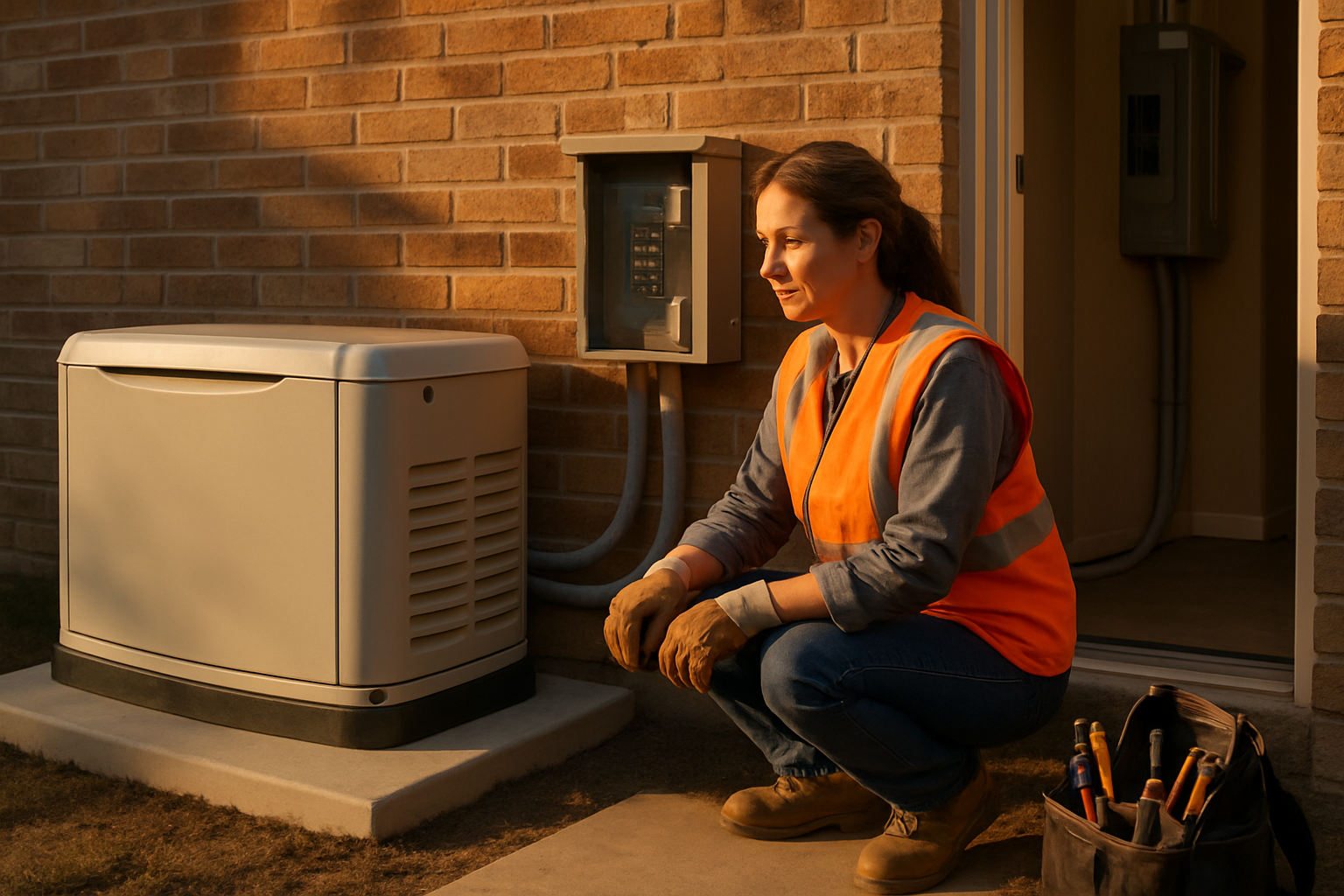
Generator calls are more profitable than most service work — but only if your estimate captures every cost before you're on-site. Miss a line item on a $12,000 job and you've just worked two days for wages instead of profit. This guide walks you through the full process for writing a whole-home standby generator installation estimate: from the site walk to the signed proposal. By the end, you'll have a consistent framework that prevents scope creep, protects your margin, and gives customers a quote they trust.
This guide targets licensed electricians quoting residential standby generator installs, typically 10kW–22kW. The same process applies to commercial jobs, though permit complexity scales significantly.
Start with a proper site walk
You cannot write a how to write a generator installation estimate from memory or a phone call. The site walk is where your estimate is won or lost, and it takes 20–30 minutes if you know what you're looking for.
Generator placement: Most manufacturers and local codes require a minimum clearance of 18 inches from windows, doors, and gas meters. Some jurisdictions require 5 feet or more from openings. Walk the property and identify two or three viable locations before any conversation about equipment.
Distance to the main panel: Every additional foot of conduit and wire adds material and labor cost. Measure from each viable placement spot to the main panel and to the gas meter. A 10-foot run through a garage wall is one budget; a 60-foot run through a finished basement is a completely different job.
Existing panel capacity: Open the panel and check whether there's room for a double-pole breaker for the transfer switch connection. An older 100-amp panel or a full 200-amp panel may need an upgrade — that's a separate scope item with its own permit. Discovering this on install day is expensive for you and infuriating for the homeowner.
Pad requirements: Permanent standby generators require a concrete or composite pad. Confirm whether you're providing that or whether it's a separate subcontract. Many solo electricians coordinate concrete subs and pass the cost through with markup — which is fine, but it needs to be priced explicitly.
Fuel type: Natural gas connects to an existing meter; propane requires a separate tank and fuel line from a propane supplier. Confirm fuel type, ask about current line pressure, and determine who's handling the gas piping. In most states, that work goes to a licensed plumber.
Take photos and measurements. You'll need them when you're at your desk, and they give the homeowner confidence that your estimate is based on their actual situation.
What to include in a generator installation estimate
A generator installation estimate that protects you needs to itemize every scope element. Here's the standard line-item breakdown for a residential whole-home install:
| Line Item | What to Include |
|---|---|
| Generator unit | Equipment cost from distributor with your markup applied |
| Automatic transfer switch (ATS) | Sized to generator and panel; full-panel or selected-circuits model |
| Electrical materials | Wire, conduit, breakers, weatherproof connectors, grounding hardware |
| Concrete or composite pad | Subcontract cost plus your coordination markup, or direct cost if you pour |
| Gas line connection | Licensed plumber subcontract plus markup; or a referral line if you refer out |
| Electrical labor | Your hours × your billable rate (see below) |
| Permit and inspection fees | AHJ permit + inspection; budget separately and show as its own line |
| Startup and commissioning | Dealer startup or your time; confirm who's responsible before you quote |
| Warranty buffer | 2–3% of total job cost for callbacks within the warranty period |
Subcontracted items (pad, gas line) should carry a coordination markup of 10–20%. You're scheduling those trades, managing the timeline, and fielding the homeowner's calls. That coordination has real cost.
Before you finalize numbers, run the materials total through JobEstimator's markup calculator to apply a consistent margin across every materials line item. Inconsistent markups on an itemized estimate are easy to spot and hard to explain.
For current market benchmarks on what electricians are charging for generator installs by job type and region, see our post on generator installation pricing for electricians in 2026.
How long does standby generator installation take?
Labor hours are the most common source of underestimation on generator jobs. Here's a realistic breakdown of the electrical scope only — this excludes the concrete pad and gas line, which are typically subcontracted:
For a 10kW partial-load install with a selected-circuit ATS, reduce these estimates by 20–30%. If the job also requires a panel upgrade — which happens when the main panel is full or undersized — add 3–5 hours and write it as a separate line item with its own permit.
Running a helper on wire-heavy jobs makes sense when the wire run is long and difficult. But always verify that a second person actually reduces your elapsed time enough to justify the additional labor cost. On a typical residential install, it usually does.
How to set your labor rate and apply markup
Your billable rate for generator work is not the same as the median electrician wage. The U.S. Bureau of Labor Statistics reports a median hourly wage of $30.38 for electricians (May 2025 data). That's what an employee earns — it doesn't include the solo contractor's overhead.
Your real cost to send yourself on a job for one billable hour includes: vehicle operating costs, fuel, commercial auto insurance, general liability insurance, license renewal fees, tools and equipment depreciation, time spent on unbillable activities like writing estimates and bookkeeping, and any slow-season downtime that still has fixed costs. Most solo trade contractors find their true cost to deploy themselves runs 1.8–2.5× their equivalent employee wage.
For generator work — which requires a master or journeyman electrician's license, generator-specific training, and knowledge of NEC Article 702 — billing below $65–$85 per hour before margin means you're absorbing overhead costs out of your pocket. Generator jobs are specialized and in demand. Bill accordingly.
On materials, the standard residential markup for electrical equipment and generator hardware runs 25–35%. Generator units are high-cost items that typically carry a 20–25% distributor margin; your markup sits on top of your distributor cost, not list price. If you're passing subcontract costs (plumber, concrete) through to the customer, a 10–15% coordination markup on those items is reasonable and easy to justify.
If you want help calculating your minimum billable rate from first principles, our post on how to write a residential electrical estimate walks through the full overhead formula for solo electricians. The same math applies here.
Permit requirements for generator installation you can't skip
Every permanent standby generator installation is governed by NEC Article 702 — Optional Standby Systems, which is part of NFPA 70, the National Electrical Code. Here's what that means practically:
1. AHJ permit and inspection are mandatory. No jurisdiction allows a permanent generator install without a permit from the Authority Having Jurisdiction (AHJ). Inspection fees vary widely — budget $75–$350 and confirm with your local AHJ before you quote. Show the permit fee as its own line item on the estimate. Homeowners who understand why it's there rarely push back on it.
2. Transfer switch or interlock is required. NEC 702.6 requires a means to prevent the simultaneous connection of the generator and the utility supply — in other words, backfeed protection. An automatic transfer switch satisfies this, but the AHJ will verify that the switch is rated and installed correctly. Manual interlock kits are also acceptable in some jurisdictions for smaller installs.
3. Disconnecting means must be accessible. NEC 702.11 requires a readily accessible disconnect for the generator. Coordinate the location with the homeowner during the site walk so you're not relocating it after rough-in.
4. Gas line permit is separate. If your scope includes coordinating the gas plumber, that work requires a separate permit pulled by the licensed plumber in most states. Build the plumber's permit fee into your subcontract estimate.
Never agree to skip the permit because a homeowner wants to avoid the hassle or the inspection fee. If you're caught working without one, your license is at risk. More practically, an unpermitted generator install will show up as an open permit or a code violation when the homeowner tries to sell the house — and they will blame you.
Takeaways
- Walk the site before you write a number. Distance to the panel, fuel type, pad requirements, and panel capacity all change the price significantly.
- Itemize every scope element: equipment, ATS, materials, labor, subcontracts (pad and gas), permit, commissioning, and a warranty buffer.
- Plan for 7.5–11 electrical labor hours on a 22kW whole-home install. Panel upgrades and long wire runs add more — write those as separate line items.
- Your billable rate needs to cover real overhead, not just wages. Generator work is licensed and specialized; billing below $65–$85/hr absorbs overhead costs out of your margin.
- NEC Article 702 mandates a permit, ATS interlock, and accessible disconnect on every permanent install. The permit fee goes on the estimate as a visible line item.
Putting the estimate in front of the customer
A generator job is one of the larger checks a homeowner will write for trade work. They're comparing you against two or three other quotes, and the contractor who itemizes clearly wins more often than the one who gives a round number.
Present your estimate with every line item labeled, the permit cost visible, and the subcontract costs distinguished from your direct scope. Walk the customer through the main components. Explain what NEC 702 requires and why the permit exists — most homeowners appreciate the thoroughness and it builds trust before you've started a single hole.
JobEstimator generates itemized trade quotes in seconds. You bring the site measurements and labor hours; it handles the math, the markup, and the proposal format. Plans start at $39/mo — less than the margin you'd recover on a single generator job with a tighter estimate.