Drywall labor cost per square foot in 2026: a contractor's rate card
What to charge for drywall labor in 2026: hanging rates, finishing rates by level, regional premiums, and repair minimums—sourced from BLS and market data.
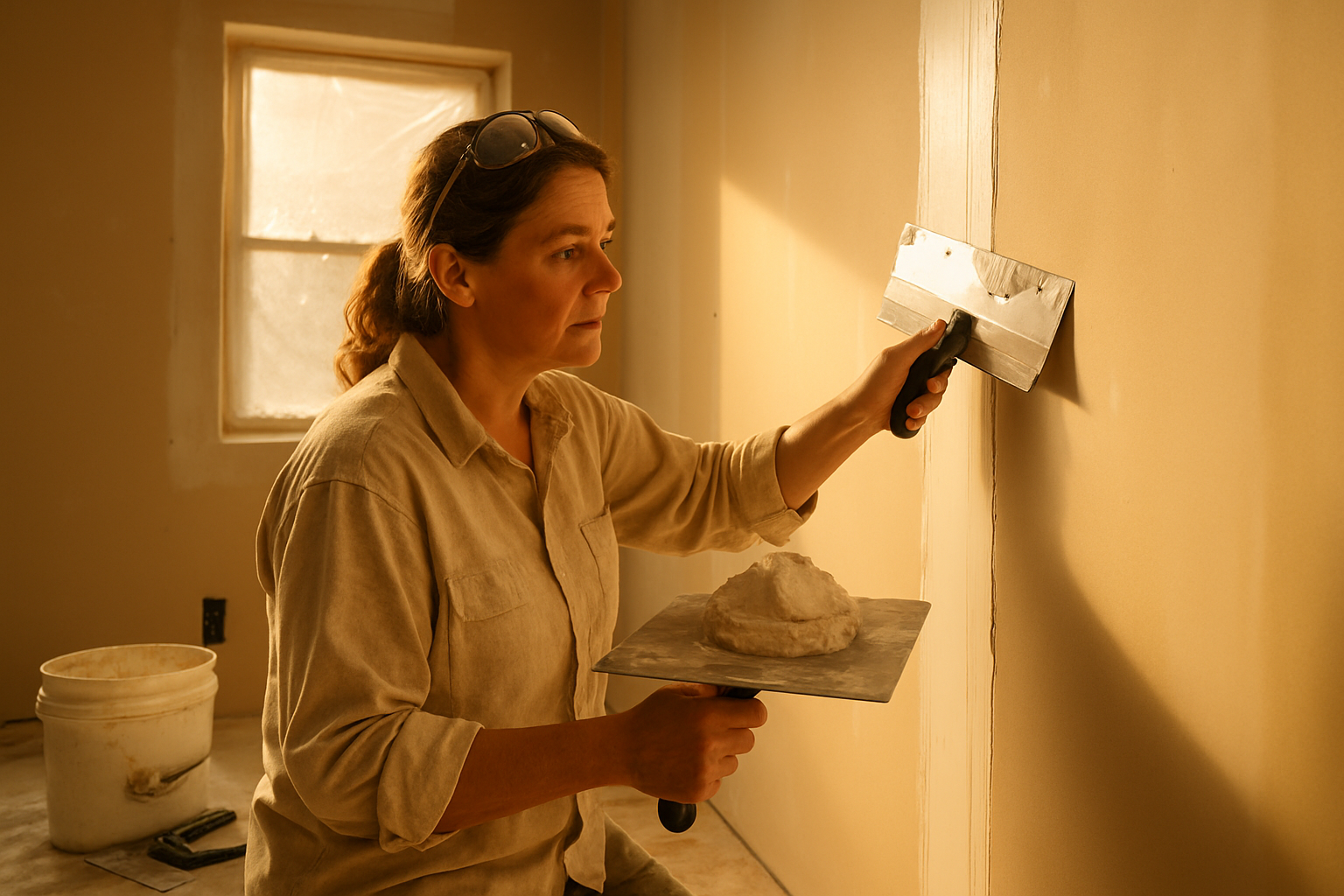
Most drywall pricing guides are written for homeowners trying to budget a renovation, not for the contractor writing the quote. If you've searched "drywall labor cost per square foot" and found pages giving you $1–$3 without specifying what phase that covers, what finish level it assumes, or what region it reflects — you know the problem. This guide gives you the rate card instead: hanging and finishing broken out separately, level by level, with the BLS wage data and regional context you need to price competitively without leaving money behind.
What to charge per square foot for hanging drywall
Hanging — cutting panels and screwing them to studs — is the faster, more physical phase. On an open new-construction floor plan with 9-foot ceilings and few obstacles, an efficient hanger moves 600–900 square feet per day. That pace drops sharply in remodel work: narrow halls, live plumbing and electrical, lots of custom cuts around windows, returns, and niches.
According to HomeGuide's 2026 drywall cost data, hanging-only labor runs in these ranges:
| Job type | Hanging labor (per sq ft) |
|---|---|
| New construction, open floor plan | $0.85 – $1.10 |
| New construction, standard layout | $1.00 – $1.35 |
| Remodel, straightforward rooms | $1.25 – $1.65 |
| Remodel, tight or complex layout | $1.65 – $2.00 |
| Ceiling (any type) | Add $0.15 – $0.30 |
A few things push you to the high end: vaulted or coffered ceilings, any radius or arched work, haul-away of old drywall included in your scope. If materials are included in your bid, price them separately and apply a markup before adding them to your labor number. The free markup calculator at JobEstimator handles the material side so your labor quote doesn't carry the materials risk.
Finishing rates by finish level
Finishing is where most of the money is, and most of the pricing disputes. The U.S. Gypsum Association defines five finish levels, Level 1 through Level 5, each specifying how many coats of joint compound are applied and whether primer is required. Those definitions directly drive your labor cost — a Level 5 job in a room destined for flat paint is 2.5–3× the finishing labor of a Level 2 in a utility space.
Finishing-only labor rates in 2026, per HomeGuide's 2026 drywall cost data:
| Finish level | What it includes | Finishing labor (per sq ft) |
|---|---|---|
| Level 1 | Tape embedded in first coat, tool marks acceptable | $0.45 – $0.70 |
| Level 2 | One additional coat over tape and fasteners | $0.65 – $0.95 |
| Level 3 | Two coats plus skim over entire surface | $0.95 – $1.35 |
| Level 4 | Three coats, sanded smooth, primer ready | $1.25 – $1.80 |
| Level 5 | Three coats plus full skim coat, sanded, primed | $1.75 – $2.50 |
Level 1 is appropriate for garages, attic spaces, and mechanical rooms that will get texture or heavy paint. Level 4 is the standard residential spec for walls that take satin or semi-gloss. Level 5 is what you need when the homeowner wants flat paint under raking light — every screw depression filled, every seam feathered, the whole surface skim-coated. Confirm the required level in writing before you price it.
For most residential work, you'll price hanging and finishing together in a single per-square-foot number. A common combined rate is $1.75–$2.50/sq ft for a Level 4 finish (hanging plus finishing), rising to $2.50–$3.75/sq ft for Level 5. Showing each phase as a separate line in your bid, as covered in how to write a drywall estimate, protects you when the scope changes mid-job.
What the BLS wage floor tells you about your billing rate
If you're anchoring your rate and you're not sure where to start, begin with what it actually costs to have the work done — including your own time.
The U.S. Bureau of Labor Statistics reports a median hourly wage of $28.00 for drywall and ceiling tile installers and $31.09 for tapers as of May 2024. Those are employee wages — no self-employment tax, no tool replacement, no van payment, no general liability insurance, no time spent bidding jobs, driving to the supplier, or waiting on deliveries.
As a self-employed contractor, the IRS charges a 15.3% self-employment tax on net income — the combined employer and employee share of Social Security and Medicare. Layer in general liability insurance (typically $1,200–$2,500 per year for a solo operator), tool replacement, and the reality that you're billing 5–6 productive hours out of an 8-hour day, and a $28/hour wage floor costs you considerably more than $28 to sustain.
A common benchmark: your billable labor rate needs to be at least 2–2.5× your effective hourly wage cost to cover overhead and leave a margin worth keeping. For a solo drywall contractor working at journeyman-level efficiency, that puts your target billing rate at $55–$75/hour — which aligns with the per-square-foot ranges above for most job types when you factor in productivity.
The math is straightforward: if you hang and finish 400 sq ft in a day at a combined rate of $2.25/sq ft, you grossed $900. If your effective overhead and labor floor runs $350/day, you cleared $550 before taxes and equipment wear. Whether that number works depends on your market and your actual overhead, which is why the BLS wage is a floor to build from, not a target to match.
Drywall labor rates by region
The BLS Occupational Employment Statistics consistently shows higher construction wages in the Northeast, California, and the Pacific Northwest versus the Sun Belt and Midwest. Drywall rates track the same pattern.
A rough regional adjustment applied to the national midpoint of the rate ranges above:
| Region | Adjustment vs. national midpoint |
|---|---|
| Northeast (NY, MA, CT, NJ) | +25% to +40% |
| California | +30% to +45% |
| Pacific Northwest (WA, OR) | +15% to +25% |
| Sun Belt (TX, FL, GA, AZ) | ±5% |
| Midwest (OH, IN, MI, KY) | –10% to –20% |
| Rural markets, any region | –15% to –25% |
These are multipliers on the ranges, not separate rates — a Level 5 finish in rural Ohio is still more labor than a Level 3 in suburban Atlanta, even after regional discounting. For the most current state-level data, the BLS Occupational Employment and Wage Statistics tool lets you search median wages by state.
Urban vs. rural variation within a single state can be nearly as large as interstate differences. If you're working across a wide geography, price each job to the local market rather than using one statewide rate.
Drywall repair calls: minimum charges and hourly rates
Per-square-foot pricing breaks down for small repair work. A popped screw, a 6-inch texture patch, or a door-ding fix involves more setup, texture-matching, and cleanup time than actual drywall labor. You can't apply your per-square-foot rate to 2 square feet of patching and come out ahead.
According to HomeGuide's 2026 drywall repair data, repair contractors typically charge $65–$100 per hour for small patches, with a minimum call-out charge of $150–$250 regardless of job size. Setting a minimum is one of the cleanest ways to avoid burning a morning on a call that pays $90 before drive time.
The same dynamic applies to any small-job service call — the pricing logic is similar to what solo contractors use for emergency service calls in other trades. If your repair scope is under an hour of actual work, price it at your minimum, not by the patch. And if you take on repairs regularly, build the minimum into your quoting template so it's never an afterthought.
Takeaways
- Hanging-only labor runs $0.85–$2.00/sq ft depending on job type; remodel and ceiling work command a consistent premium over open new-construction layouts.
- Finishing-only labor is level-dependent: Level 1 runs $0.45–$0.70/sq ft, Level 5 runs $1.75–$2.50/sq ft — confirm the spec before you quote.
- The BLS reports median employee wages of $28.00/hour for drywall installers (May 2024); as a self-employed contractor, target 2–2.5× that in your billing rate to cover SE tax, overhead, and margin.
- Regional markets move rates ±25–45% versus the national midpoint — the Northeast and California are meaningfully higher; Midwest and rural markets are lower.
- Set a minimum call-out charge of $150–$250 for repair work — per-square-foot pricing doesn't hold for small patch jobs.
Putting your rate card to work on the next bid
A rate card is only useful if you can apply it fast enough that bidding doesn't eat your schedule. JobEstimator is built for exactly that — enter your hanging rate, finishing rate by level, material markup, and repair minimum once, and every new quote pulls from those numbers automatically. No spreadsheet to update, no formula to remember when you're standing in a parking lot typing out a quote on your phone.
If you're pricing drywall as part of a larger remodel or GC scope, the tool handles multi-phase bids as well. See what's included on the JobEstimator pricing page — it's built for solo and small-crew contractors who need fast, professional quotes, not enterprise software with a three-month setup.
Sources
- https://www.bls.gov/ooh/construction-and-extraction/drywall-and-ceiling-tile-installers-and-tapers.htm
- https://www.irs.gov/businesses/small-businesses-self-employed/self-employment-tax-social-security-and-medicare-taxes
- https://www.gypsum.org/technical/finishing/levels-of-gypsum-board-finish/
- https://homeguide.com/costs/drywall-installation-cost